
News
John Deere Model A History Timeline: Milestones and Innovations
Aug
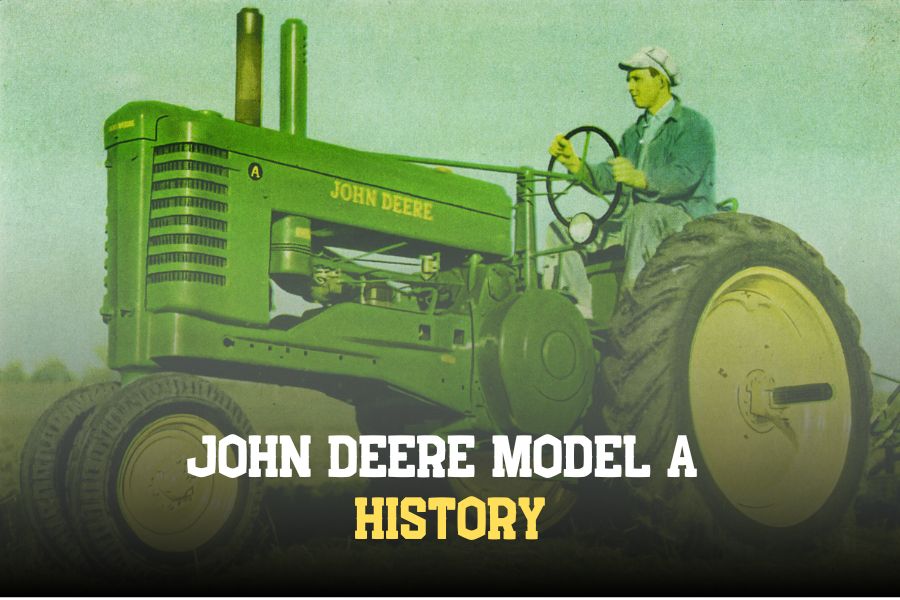
When talking about the John Deere Model A, it’s not only a classic. It also represents the progress of American agriculture. The Model brought modern engineering to farmers during a period of significant change.
Let’s explore John Deere Model A history as well as all its great stories.
When Was the First Model A Introduced?
The first John Deere Model A was produced in 1934. At the time, American agriculture was turning toward larger-scale output. Therefore, the farmers needed more powerful machinery to support their farming tasks.
John Deere replied with its first full-sized row-crop tractor. It had 2 large drive wheels, and this was really an innovative step forward.
The Model A was designed not just for efficiency, but also for adaptability. It could handle a wide range of duties across different terrains.
It set a new standard for tractor design as well as became the cornerstone portfolio of John Deere for decades.
Variants Of Model A Tractors
Model A included many variants, listed as below:
- AO: Used in orchards
- AI: Used in industry
- AN: Featured with a single wheel in front
- AW: Featured with a wide front
- AR: Version for non-crow-crop purposes
- ANH & AWH: Version for high-crop purposes
Some Key Points in John Deere Model A History
The John Deere Model A tractor played a vital role in the development of American agriculture. This tractor shaped the present agricultural scene through many redesigns and technical upgrades.
Let’s learn about its remarkable milestones in more detail!
Debut Year 1934
The Model A made its first appearance in 1934, nearly 100 years after the John Deere company was founded.
Model A was the new arrival of John Deere after Models B, C, and D from 1923. This tractor was introduced to the market with many significant improvements in design and functionality.
The most innovative feature was that Model A used rubber tires instead of traditional steel wheels. The engine featured 2 horizontal cylinders, like those of the Waterloo Gasoline Engine – the company Deere purchased in 1918.
Full Production In 1935
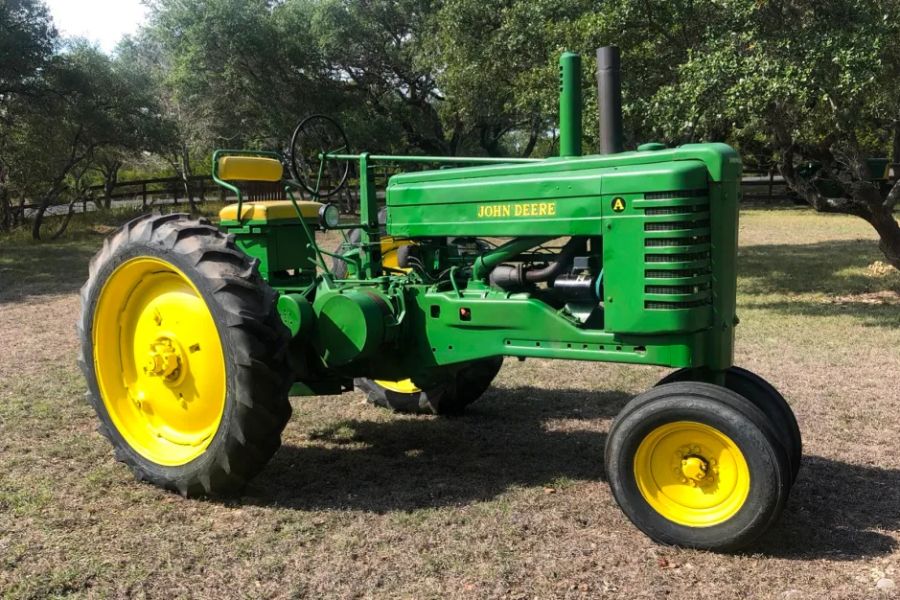
After its initial release in 1934, the John Deere Model A went into full production in 1935. This marked one of the company’s most iconic tractor lines.
The primary purpose of Model A’s design was for row-crop farming. During the Great Depression, it was a critical aspect of American agriculture.
The Model A stood out in 1935 due to its versatility and advanced engineering. It could generate approximately 18 horsepower on the drawbar and 24 horsepower on the belt. This was sufficient for a wide range of farm tasks.
Rubber tires offer better speed, traction, and riding comfort across a wide range of terrain, compared to conventional rubber tires.
The Model A had better seat posture and greater access to control. These improvements helped farmers reduce the pressure of long working hours.
Styled Model A In 1939
In 1939, John Deere introduced the first “styled” version of the Model A. Henry Dreyfuss, an industrial designer, simplified the tractor with a redesigned bonnet, enclosed radiator, and refined sheet metal body.
While mechanical changes were initially limited, the redesign quickly came with a power boost of roughly 34 drawbar horsepower.
Significant Improvements In the 1940s
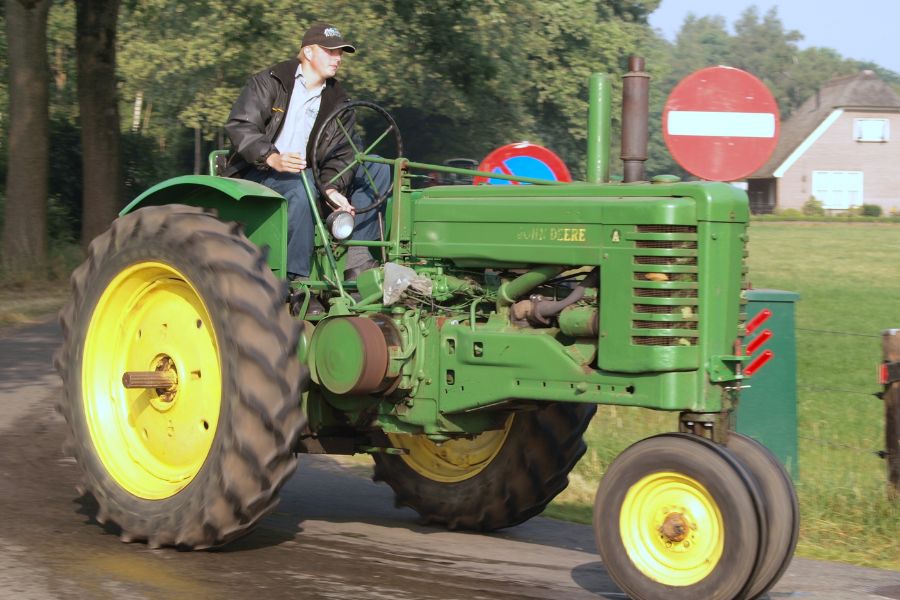
After World War II, John Deere engineers applied years of research to improve the Model A. By 1947, a factory-installed electric starter and lighting system became available. This brought modern convenience to farm work.
The tractor was equipped with a six-speed transmission, upgraded from the original four-speed. The upgrade increased the top speed to nearly 11 mph, making the farm work faster.
The operator station also received ergonomic changes. They included a more comfortable seat, an altered steering column, and optimized brakes for greater control.
Ended Production In 1952
In 1952, John Deere formally stopped producing Model A after over 20 years of innovation and supremacy. It was one of the company’s most successful tractors ever, with over 320,000 units produced by that point.
Its last iterations had six-speed transmissions, upgraded engines, and cutting-edge luxuries like electric start. The John Deere Model 60 then replaced the Model A. It carried on the row-crop tractor tradition by adding even more features and power.
The Model A is still a favorite among collectors and enthusiasts of old farm equipment due to its longevity, timeless design, and historical significance.
Conclusion
The John Deere Model A history tells us a powerful story of innovation. Although Model A was discontinued in 1952, it had set the standard for its next row-crop tractors.
The Model A is still a proud representation of John Deere’s commitment to performance and advancement.