
News
Top 10 Vintage John Deere Tractors Of All Time
Oct
For over a century, vintage John Deere tractors have been true American farming icons. These iconic machines not only altered agriculture but also rural life. Their power, durability, and innovative design have changed the agriculture industry forever.
Let’s take a nostalgic look at the top 10 antique John Deere tractors of all time.
10 Vintage John Deere Tractors That Changed The Farming World
The early 1900s saw the start of John Deere’s legendary journey into tractor innovation. Let’s start with Waterloo Boy, which paved the very first step for the whole journey.
1914 – Waterloo Boy
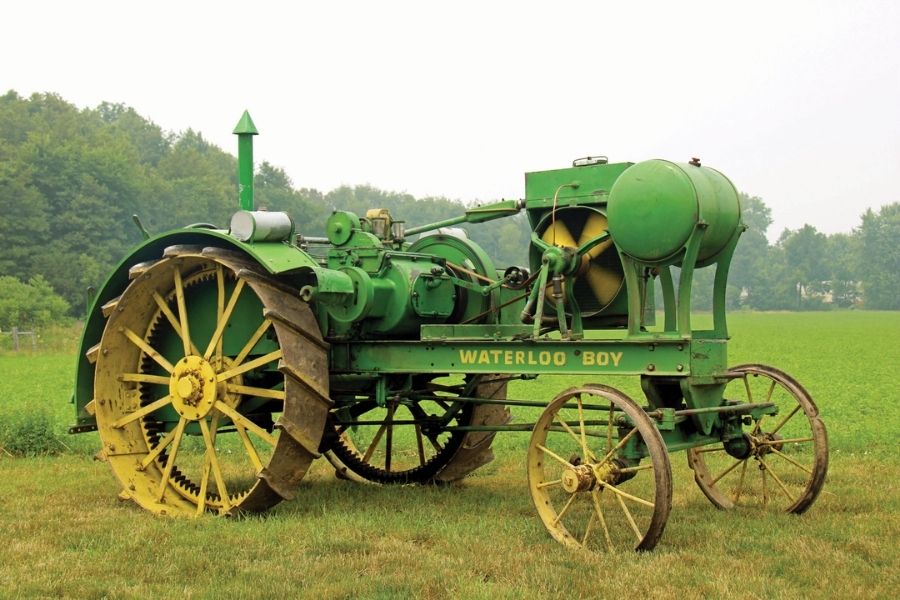
The Waterloo Boy marked John Deere’s first foray into the tractor business in 1914. It was available in a variety of engine capacities, immediately gaining popularity among farmers.
John Deere bought the Waterloo Gasoline Engine Company in 1918. Then, they continued to produce this model until 1923. The Waterloo Boy proved that gasoline-powered tractors could completely replace horses.
1918 – Dain All-Wheel-Drive
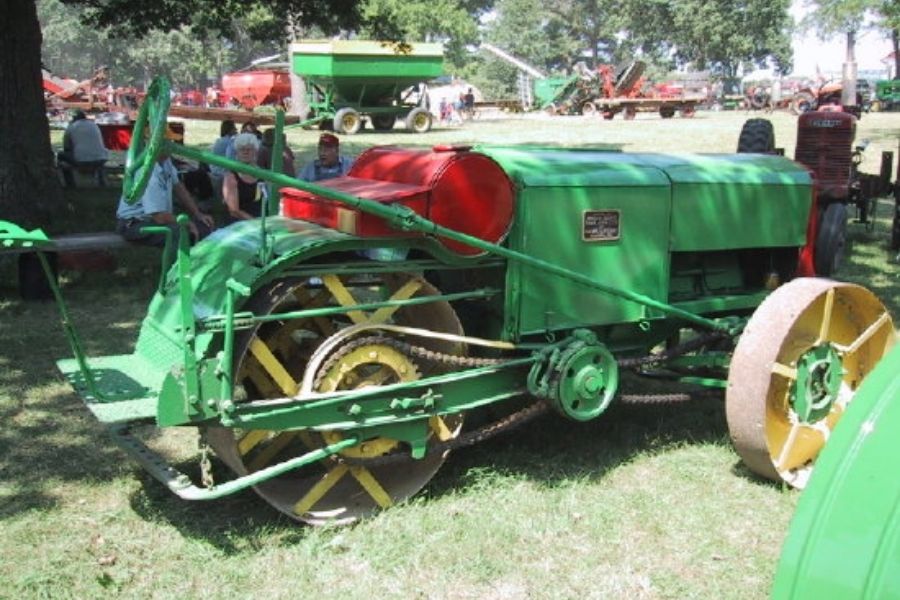
In 1918, the Dain All-Wheel-Drive became the first tractor produced under the John Deere trademark. It had a 4-cylinder engine and an all-wheel-drive system that were way ahead of their time. This provides excellent traction and control.
Though just a few were manufactured, the Dain is an exceptional example of Deere’s innovative legacy.
1923 – Model D

From 1923 until 1953, the Model D became one of John Deere’s longest-running and most successful tractors. It was strong, dependable, and perfect for heavy farm work.
Early models had steel wheels. Anyway, in 1925, rubber tires had replaced them to improve traction and comfort. The Model D set the benchmark for future generations of tractors.
1927 – Model C (General Purpose)
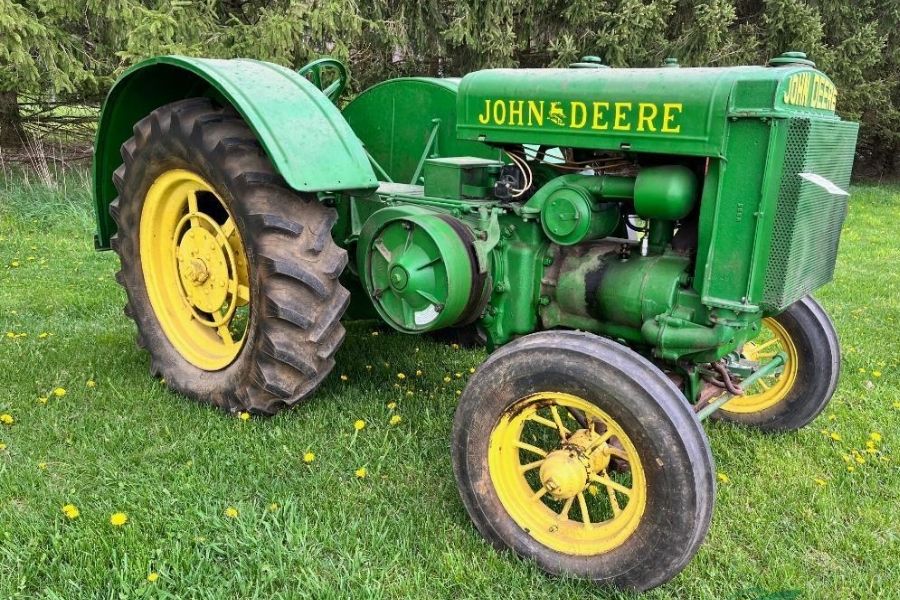
John Deere introduced Model C in 1927. Later, it was renamed the General Purpose in 1928 to prevent confusion with the Model D. It was John Deere’s first real row-crop tractor, built for versatility and ease of operation.
During production, 5 different versions were released. This demonstrated Deere’s early commitment to improving machinery to meet the diverse needs of farmers.
1934 – Model A (General Purpose)
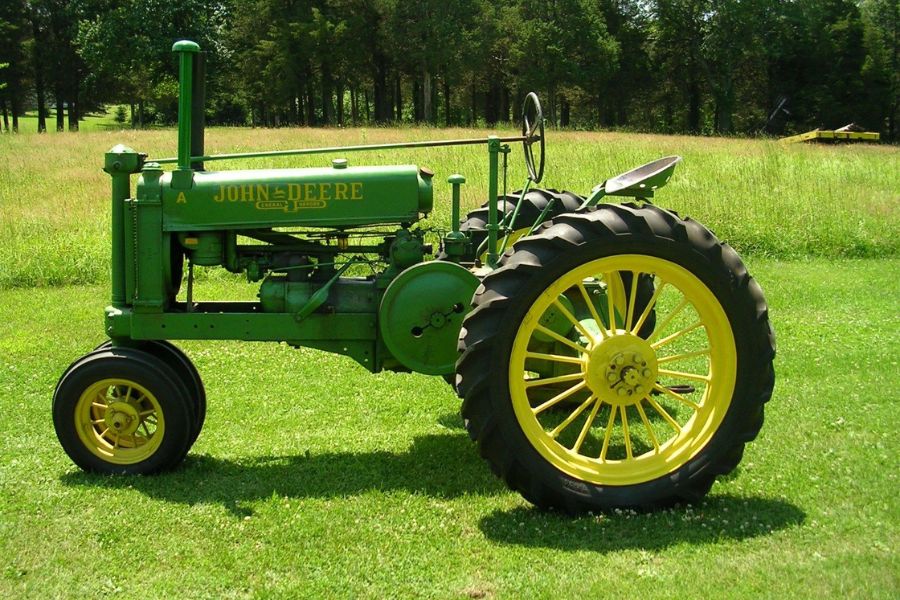
The company introduced the Model A in 1934. It was the company’s first real row-crop design, using a tricycle-style 3-wheel arrangement for easier movement between crop rows.
That’s why Model A quickly became one of the most recognizable tractors of John Deere.
The Model A has undergone 8 variations over 20 years, maintaining excellent performance and efficiency. It is a reliable workhorse for countless farmers.
1937 – Model G (GM – General Modern)
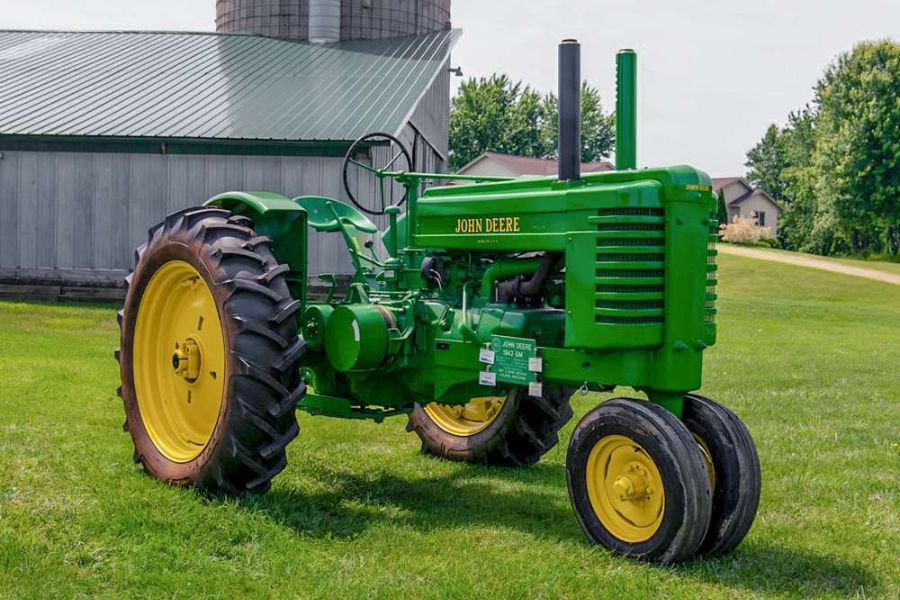
The Model G was John Deere’s largest row-crop tractor at the time. It was debuted in 1937, and during its 12-year existence, it had 3 major design modifications.
During World War II, it was temporarily renamed Model GM (General Modern) to be eligible for price adjustments. After the war, the name was changed back to Model G, preserving its status as a powerful symbol of agriculture.
1938 – Restyled Model D
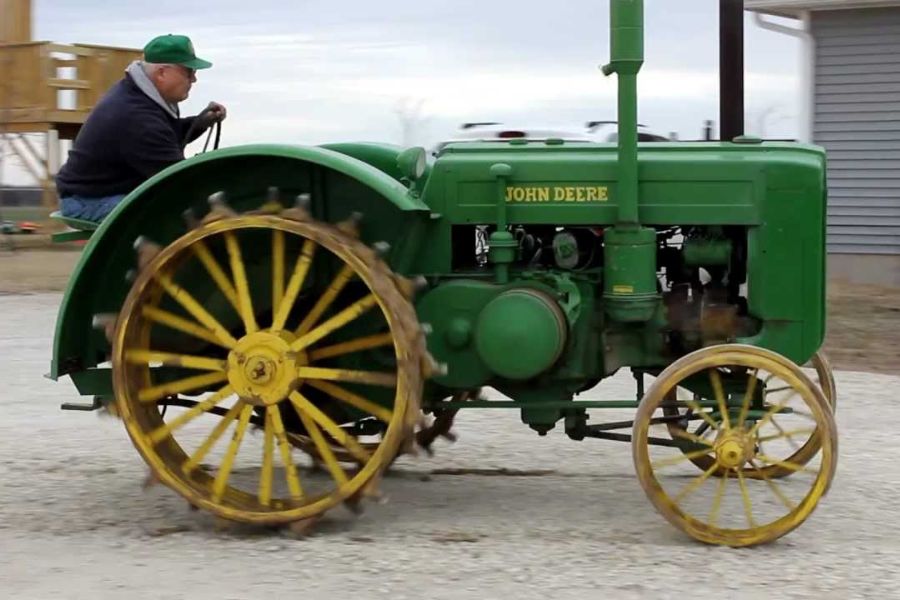
In 1938, industrial designer Henry Dreyfuss gave vintage John Deere tractors a new, modern appearance. The outcome was the restyled Model D, which was introduced in 1939.
This 42-horsepower machine was not only stylish, but it also featured electric lighting and starting. This helped farming become even more comfortable and efficient.
It was one of the first Deere tractors that combined design and functionality.
During WWII – Model M
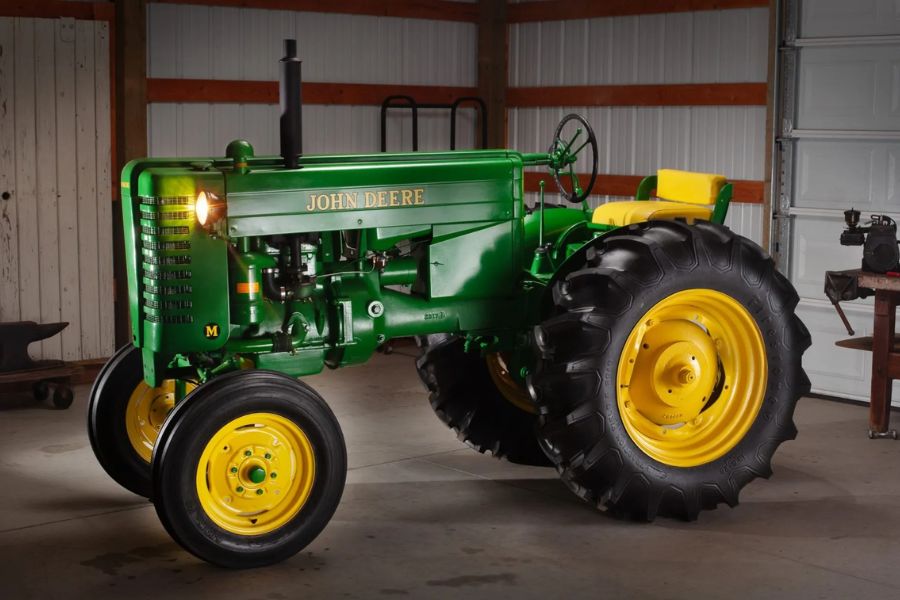
The Model M was developed during World War II and replaced earlier versions such as the H, L, and LA. It was suitable for small farms and was both compact and powerful.
This Model M was the first John Deere tractor to have the Touch-O-Matic hydraulic system, standard PTO, and electric start. These were significant innovations that boosted farmer productivity and convenience.
1949 – Model R
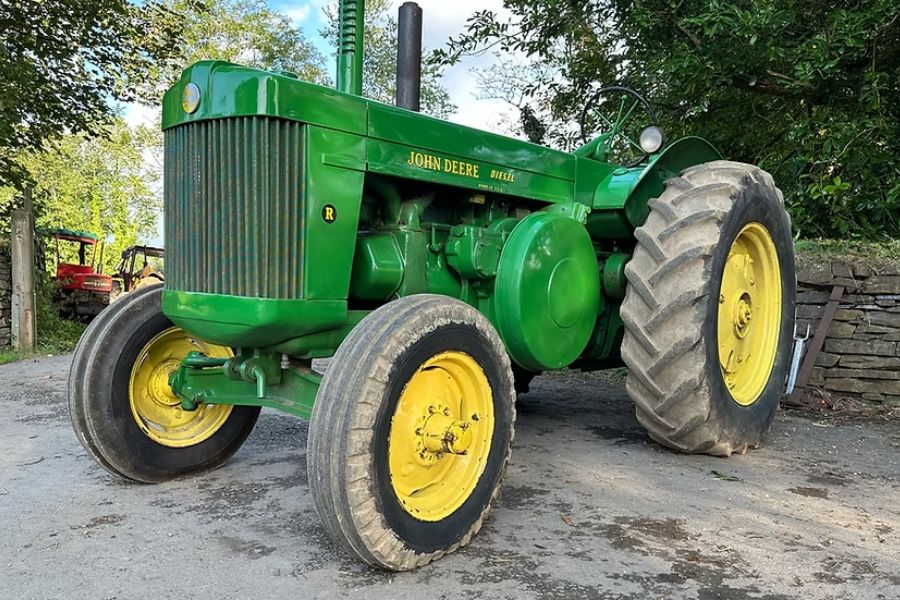
Launched in 1949, the Model R was John Deere’s first diesel-powered tractor. It was equipped with a live PTO with its own clutch and superior hydraulics. This allowed operators to lift large implements effortlessly.
Model R was sturdy, dependable, and lasted a decade. It became a symbol of modern farming advancement.
1959 – Model R 730
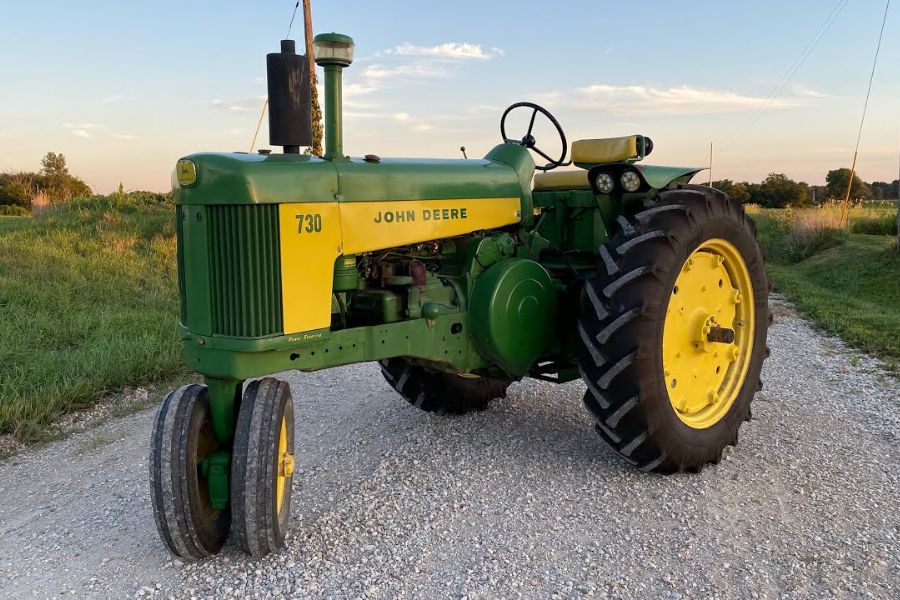
In 1959, Deere introduced the Model 730, an upgraded successor to the Model R. It became popular with collectors and tractor pull enthusiasts for its robustness and consistent power.
The 730 was available in diesel, gasoline, and LPG versions as well as a row-crop tricycle option. This provided the flexibility and power that defined John Deere’s reputation.
Conclusion
So, you can see that each model always brought something new. Even decades later, these vintage John Deere tractors remain a symbol of innovation. This proves the spirit of John Deere with time – “Nothing Runs Like a Deere”.