Description
-
Model List:
- 112 Flail Shredder
- 1. Introduction
- 1.1. Foreword
- 1.2. Identification View
- 1.3. A Message to Our Customers
- 1.4. Preliminary Checks
- 1.5. Regions and Country Versions
- 1.6. Machine Overview
- 1.7. Recognize Safety Information
- 1.8. Understand Signal Words
- 1.9. Follow Safety Instructions
- 1.10. Keep Riders Off Machine
- 1.11. Prepare for Emergencies
- 1.12. Wear Protective Clothing
- 1.13. Use Seat Belt Properly
- 1.14. Use Safety Lights and Devices
- 1.15. Practice Safe Maintenance
- 1.16. Avoid HighPressure Fluids
- 1.17. Store Attachments Safely
- 1.18. Protect Against Noise
- 1.19. Stay Clear of Rotating Drivelines
- 1.20. Remove Paint Before Welding or Heating
- 2. Safety Signs
- 2.1. Read Carefully Safety Signs
- 2.2. Gear Case Shield Label
- 2.3. Rotor Drive Shield Label
- 2.4. Flail Shredder Front View Label
- 2.5. Rotor Drive Label
- 2.6. Flail Shredder Rear View Label
- 2.7. Gear Case Shield Label
- 3. Preparing the Tractor
- 3.1. Tractor Size
- 3.2. Positioning Tractor Drawbar
- 3.3. Adjusting Tractor Drawbar and Hitch
- 3.4. Checking Ballast, Wheel Spacing, and Tire Inflation
- 3.5. Tractor Brakes
- 4. Preparing the Machine
- 4.1. Flail Shredder Positions
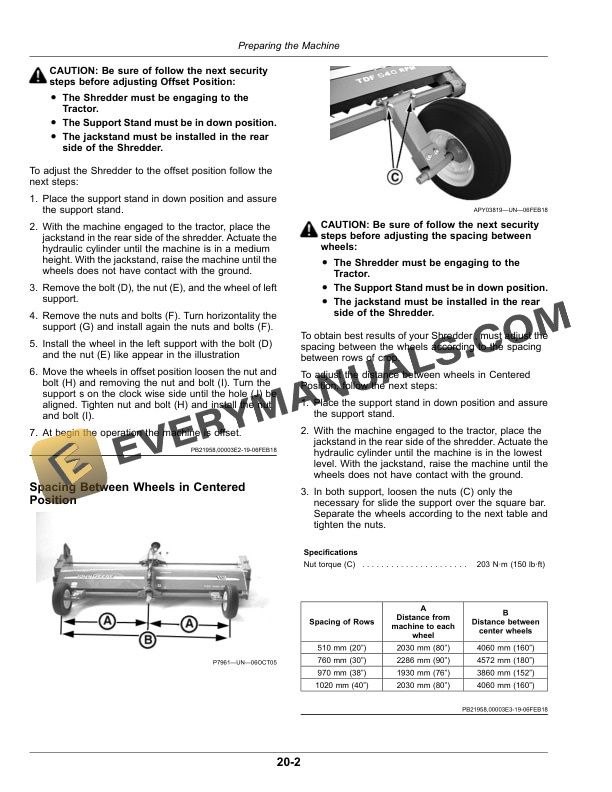
- 4.2. Adjusting to Offset Position
- 4.3. Spacing Between Wheels in Centered Position
- 4.4. Jackstand
- 4.5. Place Jackstand in Vertical Position
- 4.6. Before You Start
- 5. Attaching and Detaching
- 5.1. Attaching Shredder to Tractor
- 5.2. Detaching Shredder from Tractor
- 5.3. Use Correct Hose Tips
- 5.4. Attaching PTO Driveline
- 6. Transporting
- 6.1. Use a Safety Chain
- 6.2. Use Safety Lights and Devices
- 6.3. Tow Loads Safely
- 6.4. Observe Maximum Transport Speed
- 6.5. Transporting Drawn Flail Shredder
- 6.6. Preparing the Shredder for Transport
- 6.7. Follow Safe Transport Procedures
- 6.8. Keep Riders off Machine
- 7. Operating the Machine
- 7.1. Brakein the Shredder
- 7.2. Keep Riders off Machine
- 7.3. Follow Safe Operating Procedures
- 7.4. Operating Shredder for Best Performance
- 7.5. Maintaining Rotor Balance
- 7.6. Adjusting Rotor Drive Belts
- 7.7. Adjusting the Pulleys
- 7.8. Adjusting Cutting Height
- 7.9. Skid Plates
- 7.10. Support Stand
- 8. Attachments
- 8.1. Disk Hitch (Drawn Flail Shredders)
- 8.2. PTO Driveline
- 9. Lubrication and Maintenance
- 9.1. Lubricating and Maintaining Machine Safely
- 9.2. Gear Case Lubricant
- 9.3. Perform Lubrication and Maintenance
- 9.4. Lubrication Intervals
- 9.5. PTO Driveline
- 9.6. Wheel Support
- 9.7. Drive Pulley
- 9.8. Adding Oil to the Gear Case
- 9.9. Wheel Bearing
- 10. Trouble Shooting
- 10.1. Knife Troubleshooting
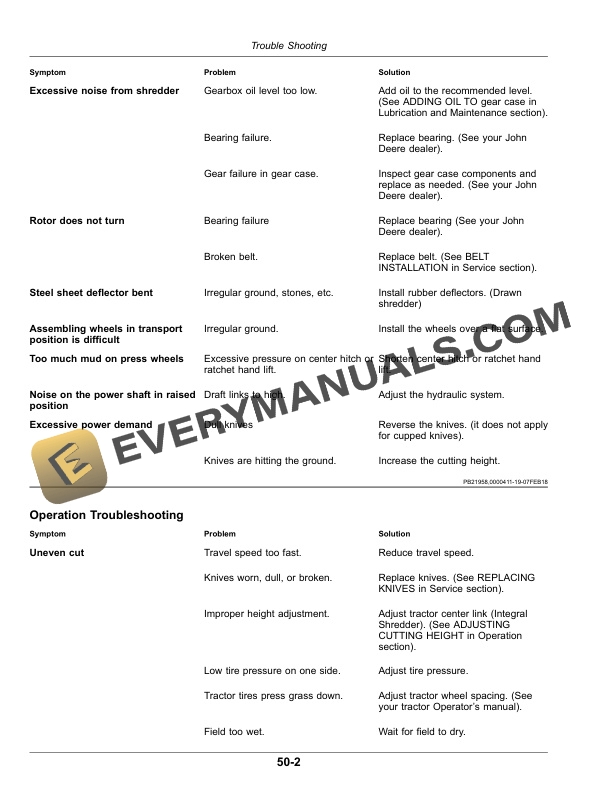
- 10.2. General Troubleshooting
- 10.3. Operation Troubleshooting
- 11. Service
- 11.1. Practice Safe Service Procedures
- 11.2. Rotor Knives
- 11.3. Inspecting Knives
- 11.4. Inspecting Knife Fasteners
- 11.5. Replacing Knives
- 11.6. Bearing Guards
- 11.7. Gear Case Service
- 11.8. Crop Deflectors
- 11.9. Rubber Deflectors (Optional)
- 11.10. Rotor Shield Cleaning
- 11.11. Bearing Locking Collars
- 11.12. Rotor Drive Belts
- 11.13. Wheel Bearings
- 12. Storage
- 12.1. Store Attachments Safely
- 12.2. End of Season
- 12.3. Beginning of Season
- 12.4. Operators Manual Container
- 13. Assembly
- 13.1. SetUp Time
- 13.2. Assembling Shredder Safely
- 13.3. Assembling Flail Shredder
- 13.4. Cutting Heights
- 14. Specifications
- 14.1. Specifications
- 14.2. Metric Bolt and Screw Torque Values
- 14.3. Unified Inch Bolt and Screw Torque Values
- 14.4. Serial Number
- 15. John Deere Service Keeps You On Job
- 15.1. John Deere Is At Your Service
- 15.2. John Deere Parts
- 15.3. The Right Tools
- 15.4. WellTrained Technicians
- 15.5. Prompt Service