
Description
-
Model List:
- 915 V-Ripper
- 1. Introduction
- 1.1. Foreword
- 1.2. Identification View
- 1.3. A Message to Our Customers
- 1.4. Preliminary Checks
- 1.5. Regions and Country Versions
- 1.6. Machine Overview
- 1.7. Recognize Safety Information
- 1.8. Understand Signal Words
- 1.9. Follow Safety Instructions
- 1.10. Use Seat Belt Properly
- 1.11. Park Machine Safely
- 1.12. Keep Riders Off Machine
- 1.13. Prepare for Emergencies
- 1.14. Use Safety Lights and Devices
- 1.15. Wear Protective Clothing
- 1.16. Use a Safety Chain
- 1.17. Tow Loads Safely
- 1.18. Observe Maximum Transport Speed
- 1.19. Practice Safe Maintenance
- 1.20. Remove Paint Before Welding or Heating
- 1.21. Avoid HighPressure Fluids
- 1.22. Store Attachments Safely
- 2. Safety Signs
- 2.1. Read Safety Signs Carefully
- 2.2. Safety Signs
- 3. Preparing Tractor
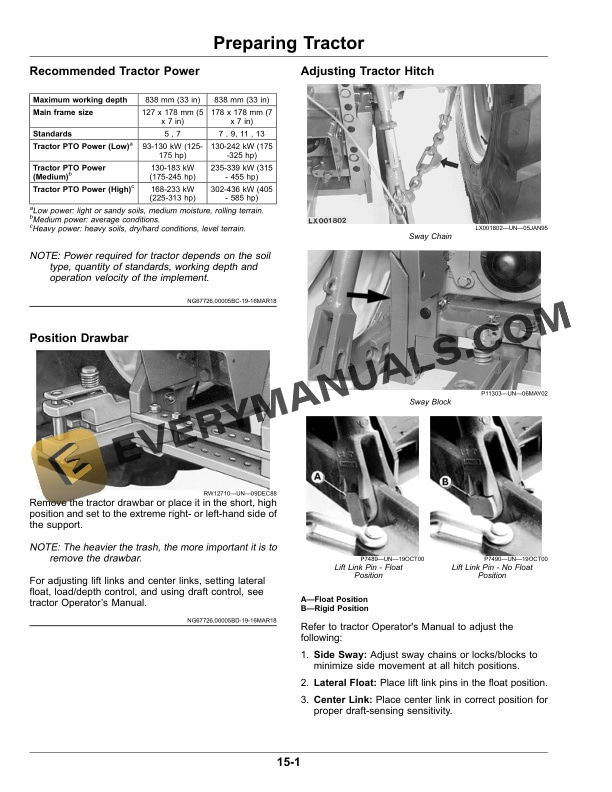
- 3.1. Recommended Tractor Power
- 3.2. Position Drawbar
- 3.3. Adjusting Tractor Hitch
- 3.4. Checking Ballast, Wheel Spacing, and Tire Inflation
- 3.5. Tractor Brakes
- 3.6. Implement Code Table
- 3.7. Determining Front Ballast
- 4. Preparing Machine
- 4.1. Checking and Lubricating Machine
- 4.2. Checking Tire Pressure
- 4.3. Checking Wheel Bolts and Bearings
- 4.4. Tightening Hardware
- 4.5. Standards
- 5. Operating Machine
- 5.1. Following Safe Operating Procedures
- 5.2. Leveling (SidetoSide) Integral VRipper
- 5.3. Leveling (FronttoRear) Integral VRipper
- 5.4. Preparing Ripper for Operation
- 5.5. Adjusting Mechanical Gauge Wheels
- 5.6. Adjusting Trip Force (SpringReset Rock Standard)
- 6. Attaching and Detaching
- 6.1. Attaching Machine Safely
- 6.2. Setting Rockshaft Selector Lever
- 6.3. Using External Raise/Lower Switch
- 6.4. Attaching Machine to Tractor
- 6.5. Attaching Implement Warning Lights
- 6.6. Detaching Integral VRipper (With Support Stands)
- 6.7. Detaching Integral VRipper (Without Support Stands)
- 7. Transporting
- 7.1. Use Safety Lights and Devices
- 7.2. Use a Safety Chain
- 7.3. Tow Loads Safely
- 7.4. Observe Maximum Transport Speed
- 7.5. Integral VRippers
- 7.6. Using Warning Lights and SMV
- 8. Troubleshooting
- 8.1. Troubleshooting
- 9. Lubrication and Maintenance
- 9.1. Alternative Lubricants
- 9.2. Lubricant Storage
- 9.3. Waste Oil
- 9.4. Discarded Tires
- 9.5. Lubrication Symbols
- 9.6. Lubrication Intervals
- 9.7. Lubricate Wheel Bearings
- 10. Service
- 10.1. Keep Service Area Clean
- 10.2. Using Safe Service Procedures
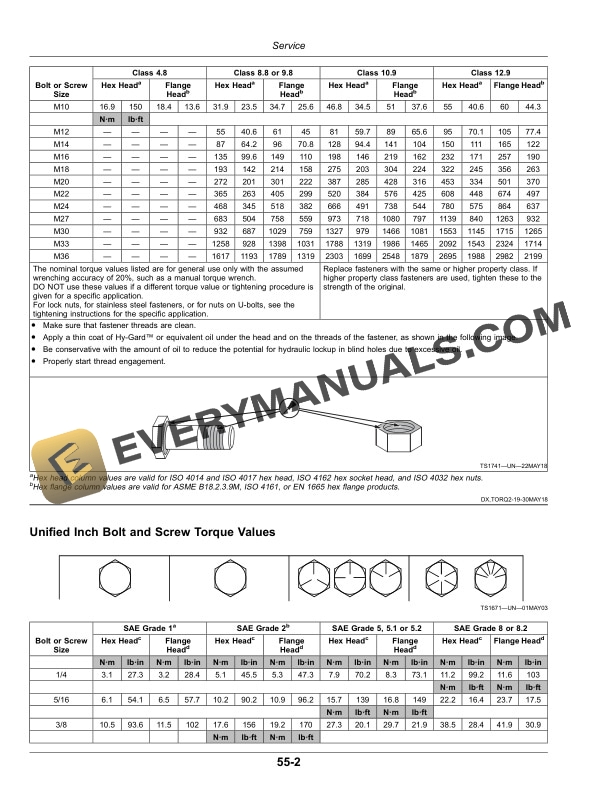
- 10.3. Metric Bolt and Screw Torque Values
- 10.4. Unified Inch Bolt and Screw Torque Values
- 10.5. Service Tires Safely
- 10.6. Checking Tire Pressure
- 10.7. Checking Wheel Bolts and Bearings
- 10.8. Discarded Tires
- 10.9. Optional Ripper Points
- 10.10. Replacing SlipOn Point
- 10.11. Replacing Ripper Point
- 10.12. Replacing Cast EXTREME LASERRIP Ripper Points
- 10.13. Shear Bolt Standards
- 11. Storage
- 11.1. Storing VRipper
- 11.2. Removing the VRipper from Storage
- 12. Specifications
- 12.1. General
- 12.2. Transport Width
- 12.3. Working Width
- 12.4. Machine Weights
- 12.5. Tractor Power Recommendations
- 12.6. Product Identification Number
- 12.6.1. Content of Individual Positions or Group of Position Character Products Serial Number
- 12.7. Keep Proof of Ownership
- 12.8. Keep Machines Secure
- 13. John Deere Service Keeps You On Job
- 13.1. John Deere Is At Your Service
- 13.2. John Deere Parts
- 13.3. The Right Tools
- 13.4. WellTrained Technicians
- 13.5. Prompt Service