Description
-
Model List:
- HD200 Sprayer Attachment For ProGator
- HD300 Sprayer Attachment For ProGator
- 1. Introduction
- 1.1. Using Your Operators Manual
- 2. Product Identification
- 2.1. Product Compatibility
- 2.2. Record Identification Numbers
- 3. Safety Labels
- 3.1. Understanding The Machine Safety Labels
- 3.2. WARNING
- 3.3. CAUTION
- 3.4. WARNING
- 3.5. WARNING
- 3.6. CAUTION
- 3.7. Operate Safely
- 3.8. Parking Safely
- 3.9. Mix and Handle Chemicals Safely
- 3.10. Read Chemical Container Label
- 3.11. Handle Chemical Products Safely
- 3.12. Practice Safe Maintenance
- 3.13. Wear Appropriate Clothing
- 3.14. Avoid High Pressure Fluids
- 3.15. Dispose of Chemicals Properly
- 3.16. Handling Waste Product and Chemicals
- 4. Preparing Vehicle
- 4.1. Preparing the Machine
- 4.2. Prepare for Assembly
- 4.3. Install Control Panel and Front Harness
- 5. Assembly
- 5.1. Tank Components
- 5.2. Electrical Components
- 5.3. Sprayer Pump and Hydraulic Components
- 5.4. Boom Components
- 5.5. Boom Hardware
- 5.6. Sprayer Assembly and Installation
- 5.7. Install Cylinder Support Bracket (HD300)
- 5.8. Install Sprayer Tank
- 5.9. Install Sprayer Tank Components
- 5.10. Install Sprayer Pump and Hoses
- 5.11. Install and Connect Rear Wiring Harness
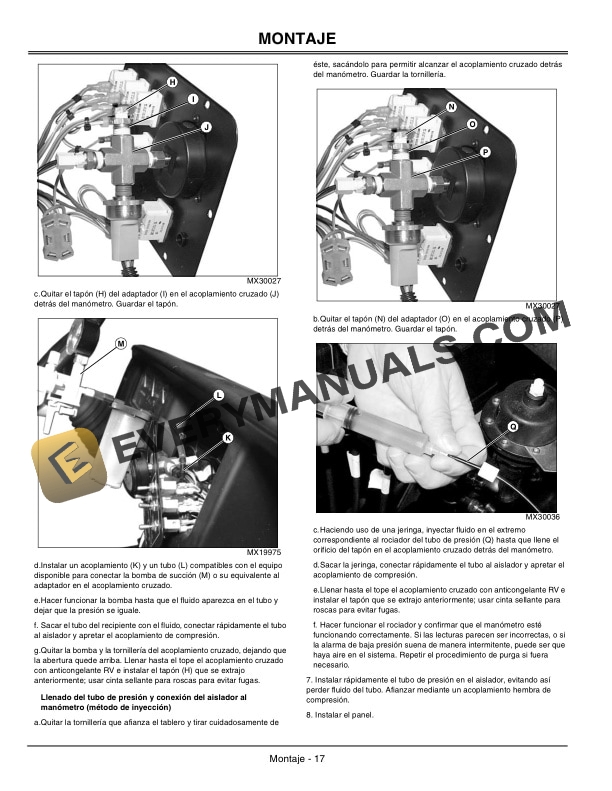
- 5.12. Fill and Connect Pressure Tube
- 5.13. Connect Hydraulic Hoses
- 5.14. Install the Boom
- 5.15. Install Down Stops
- 5.16. Install Frame Clamps
- 6. Removing and Storing
- 6.1. Prepare Machine for Removal
- 6.2. Disconnect Hydraulic Hoses
- 6.3. Disconnect Pressure Gauge Tube
- 6.4. Disconnect Rear Wiring Harness
- 6.5. Removing Sprayer
- 6.6. Storing Safety
- 6.7. Winterization and Storage
- 6.8. Removing From Storage
- 7. Installing
- 7.1. Installing Sprayer on Machine
- 8. Operating
- 8.1. Spray Tip Selection
- 8.2. Flood Style Spray Tip
- 8.3. Ultra LowDrift Style Spray Tip
- 8.4. Flat Fan Style Spray Tip
- 8.5. Understanding Dash Controls
- 8.6. Operating the Sprayer
- 8.7. Adjusting System Pressure
- 8.8. Low Pressure (Low Fluid Indicator) Warning System
- 8.9. Using the Personal Wash Tank
- 8.10. Filling and Draining Sprayer Tank
- 8.11. Using the Agitator
- 8.12. Backflushing the Inline Strainer
- 8.13. Using Boom Wings
- 8.14. Using Boom Wing Extensions (1521 Foot Boom Only)
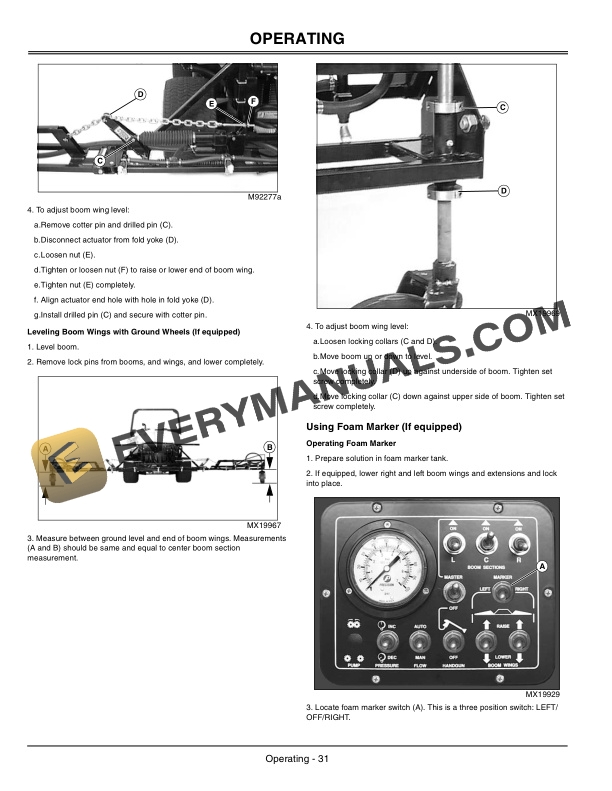
- 8.15. Adjusting Boom Level and Height
- 8.16. Leveling the Boom Wings
- 8.17. Using Foam Marker
- 8.18. Using Manual and Electric Hose Reels (If equipped)
- 8.19. Using Rinse Tank (If equipped)
- 8.20. Transporting
- 9. Service
- 9.1. Remove and Install Inline Strainer
- 9.2. Checking Main Circuit Breaker
- 9.3. Checking Fuses and Boom Wing Actuator Circuit Breaker
- 9.4. Adjusting Boom Wing Spring Tension
- 9.5. Bleeding the Isolator
- 9.6. Bleeding the Pressure Gauge Tube
- 9.7. Lubricating Boom Wing Pivots
- 9.8. Inspecting and Cleaning Vented Fill Covers
- 9.9. Servicing Foam Marker Kit (If equipped)
- 9.10. Ground Wheels (If equipped)
- 9.11. Adjusting Manual Hose Reel Tension Brake
- 9.12. Lubricating Hose Reel
- 10. Service Intervals
- 10.1. Service Intervals Standard Equipment
- 10.2. Service Intervals Optional Equipment
- 11. Troubleshooting
- 11.1. Using Troubleshooting Chart
- 12. Specifications
- 12.1. Standard Equipment
- 12.2. Optional Equipment
- 13. Getting Quality Service
- 13.1. Service Literature
- 13.2. John Deere Quality Continues with Quality Service
- 14. omtcu19468_g7_63_01jul07_.pdf
- 14.1. Introducci?n
- 14.2. Identificati?n del producto
- 14.3. Etiquetas de seguridad
- 14.4. Seguridad
- 14.5. Preparaci?n del veh?culo
- 14.6. Montaje
- 14.7. Extracci?n
- 14.8. Instalaci?n
- 14.9. Funcionamiento
- 14.10. Mantenimiento
- 14.11. Intervalos de mantenimiento
- 14.12. Resoluci?n de problemas
- 14.13. Especificaciones
- 14.14. Obtenci?n de servicio de primera calidad