Description
-
Model List:
- R310 Blast Sprayer
- R315 Blast Sprayer
- R320 Blast Sprayer
- 1. Contents
- 1.1. Identification View
- 1.1.1. Identification View
- 1.2. Introduction to the Machine
- 1.2.1. General
- 1.2.2. Technical Features
- 1.2.3. Recognize Safety Information
- 1.2.4. Understand Signal Words
- 1.2.5. Follow Safety Instructions
- 1.2.6. Prepare for Emergencies
- 1.2.7. Wear Protective Clothing
- 1.2.8. Protect Against Noise
- 1.2.9. General Machine Operation Safety
- 1.2.10. Operators
- 1.2.11. Use Steps and Handholds Correctly
- 1.2.12. Mechanical Safety
- 1.2.13. Transport in the Field and on the Road
- 1.2.14. Transport Safely
- 1.2.15. Avoid Backover Accidents
- 1.2.16. Working Area
- 1.2.17. Keep Riders Off Machine
- 1.2.18. Use Safety Lights and Devices
- 1.2.19. Protect Against High Pressure Spray
- 1.2.20. Respiratory Protection
- 1.2.21. Skin Protection
- 1.2.22. Maintenance of Means of Personal Protection
- 1.2.23. Tractor Cab
- 1.2.24. Service and Operate Chemical Sprayers Safely
- 1.2.25. Chemical Safety
- 1.2.26. Danger Symbols
- 1.2.27. NonPermissible Use
- 1.2.28. Clean Vehicle of Hazardous Pesticides
- 1.2.29. Prevent Development of Micro Organisms
- 1.2.30. Park Machine Safely
- 1.2.31. Work In Ventilated Area
- 1.2.32. Remove Paint Before Welding or Heating
- 1.2.33. Avoid Heating Near Pressurized Fluid Lines
- 1.2.34. Welding Near Electronic Control Units
- 1.2.35. Work in Clean Area
- 1.2.36. Practice Safe Maintenance
- 1.2.37. Use Proper Tools
- 1.2.38. Avoid HighPressure Fluids
- 1.2.39. Check/Replace Hydraulic Hoses
- 1.2.40. Service Tires Safely
- 1.2.41. Follow Tire Recommendations
- 1.2.42. Decommissioning Proper Recycling and Disposal of Fluids and Components
- 1.2.43. Admissible Use
- 1.2.44. Regulations for Machines in Use
- 1.2.45. Additional Safety Measures
- 1.3. Safety Decals
- 1.3.1. Pictorial Safety Signs
- 1.3.2. Replace Safety Signs
- 1.3.3. User Documentation
- 1.3.4. Turn off the Engine
- 1.3.5. Danger of Poisoning
- 1.3.6. Passengers
- 1.3.7. Drawbar Swing Range
- 1.3.8. Clean Water
- 1.3.9. Throwing Objects
- 1.3.10. Rotating Parts
- 1.3.11. Maximum Pump Speed and Hydraulic System Pressure
- 1.3.12. Hinge Points
- 1.3.13. Means of Personal Protection
- 1.3.14. Protection Against Noise
- 1.3.15. Transport Position
- 1.3.16. Dangerous Substances
- 1.3.17. Tank Drain
- 1.3.18. Machine Elevation
- 1.3.19. Maximum Pump Pressure
- 1.4. Machine Description
- 1.4.1. Basic Machine
- 1.4.2. Chassis
- 1.4.3. Solution or Main Tank
- 1.4.4. Air Group
- 1.4.5. Pressure Circuit
- 1.4.6. Spray Controls
- 1.4.7. Spray Outlets
- 1.4.8. Brake System
- 1.4.9. Transmission
- 1.4.10. Drain Tap
- 1.4.11. Cleaning Nozzles
- 1.5. Preparing the Tractor
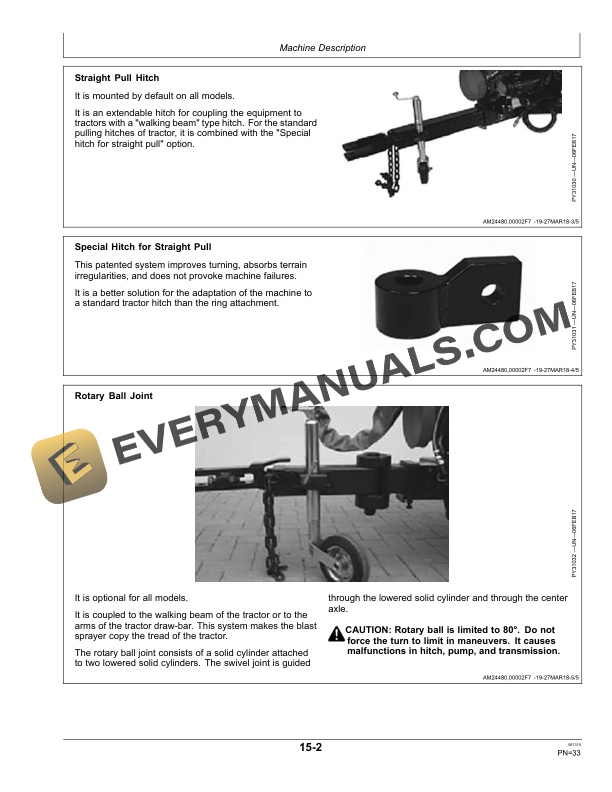
- 1.5.1. Straight Pull Hitch
- 1.5.2. Ring Hitch
- 1.5.3. Transmission Power Takeoff Assembly
- 1.5.4. Support Leg
- 1.5.5. Connection of the Hydraulic and Electrical Outlet
- 1.5.6. Installing the Controls to the Tractor
- 1.5.7. General Review and Verification
- 1.5.8. Power Supply 3Pole Plug
- 1.5.9. Fitting Electrical Socket to Tractor
- 1.6. Preparing the Machine
- 1.6.1. Assembly Instructions of the Air Group (Export)
- 1.7. Transport
- 1.7.1. Public Road
- 1.7.2. Transport Wheels
- 1.7.3. Public Road Traveling Lights
- 1.8. Startup and Operation
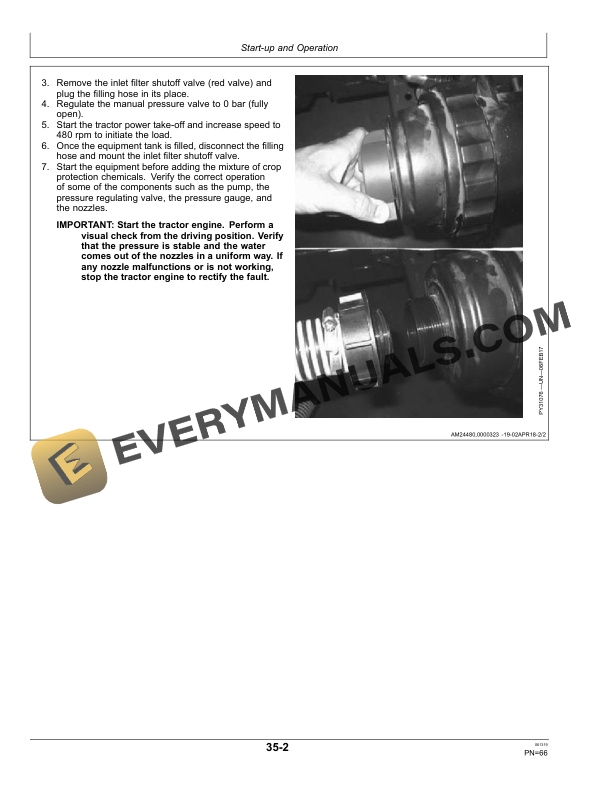
- 1.8.1. Tank Filling
- 1.8.2. Product Incorporation
- 1.8.3. Spray Control Drives
- 1.8.4. Air Group
- 1.8.5. Startup Spraying
- 1.8.6. Remove Shipping Tow Eye Were Fitted
- 1.8.7. Suction Line
- 1.8.8. Lubrication
- 1.8.9. Sprayer Internal System Cleaning
- 1.8.10. Dilution of Residual Liquids and Cleaning Procedure
- 1.9. Maintenance
- 1.9.1. Technical Information
- 1.9.2. Pretreatment Checks
- 1.9.3. Checks during Treatment
- 1.9.4. Oil Level and Lubrication
- 1.9.5. Weekly Checks
- 1.9.6. General Maintenance
- 1.9.7. Annual Official Service Checks
- 1.9.8. Malfunctions
- 1.9.9. Technical Inspection of the Machine
- 1.9.10. Flowmeter and Pump Performance Test
- 1.9.11. Metric Bolt and Screw Torque Values
- 1.10. Storage
- 1.10.1. Storage
- 1.10.2. Preservation Instructions
- 1.10.3. Protection against Frost
- 1.11. Specifications
- 1.11.1. Products to be Processed
- 1.11.2. Dimensions and Weights
- 1.11.3. Axles and Wheels
- 1.11.4. Sound Level
- 1.11.5. Physical Operating Conditions
- 1.11.6. EU Declaration of Conformity
- 1.12. Identification Plates
- 1.12.1. Rating Plate
- 1.13. John Deere Service Keeps You On The Job
- 1.13.1. John Deere Parts
- 1.13.2. The Right Tools
- 1.13.3. WellTrained Technicians
- 1.13.4. Prompt Service
- 2. Page Number
- 2.1. Section 00
- 2.2. Section 01
- 2.3. Section 05
- 2.4. Section 10
- 2.5. Section 15
- 2.6. Section 20
- 2.7. Section 25
- 2.8. Section 30
- 2.9. Section 35
- 2.10. Section 40
- 2.11. Section 45
- 2.12. Section 50
- 2.13. Section 55
- 2.14. Section IBC