Description
-
Model List:
- XUV825E Gator Utility Vehicles
- XUV825M Gator Utility Vehicles
- 1. Introduction
- 1.1. Thank You for Purchasing a John Deere Product
- 1.2. Emissions Performance and Tampering
- 1.3. Using Your Operators Manual
- 1.4. Machine Use
- 1.5. Special Messages
- 1.6. Attachments for Your Machine
- 1.7. Service Literature
- 2. Contents
- 3. Product Identification
- 3.1. Record Identification Numbers
- 4. Safety Labels without Text
- 4.1. Safety Label Location
- 4.2. Understanding the Machine Safety Labels without Text
- 4.3. Help Prevent Injury When Dumping Loads
- 4.4. Avoid Injury from Equipment Fires
- 4.5. Driver and Passenger Safety
- 4.6. Read Operators Manual
- 4.7. Avoid Injury
- 4.8. Hot Surfaces
- 4.9. Avoid Injury from Tipping
- 4.10. Read Operators Manual, Service Battery
- 4.11. Avoid Injury From Battery Gases and Acid
- 4.12. Avoid Injury From Explosion
- 4.13. Riders Can Fall Off and Be Killed
- 4.14. Rollover or Falling Off May Cause Death
- 4.15. Avoid Injury or Death from Falling Off
- 4.16. Avoid Suffocation
- 4.17. Avoid Injury from Falling
- 4.18. Avoid Injury from Crushing
- 4.19. Protective Structure Safety and Certification Label
- 4.20. Supervisor Safety Responsibilities
- 4.21. Operator Training Required
- 4.22. Operating Safely
- 4.23. Using a Spark Arrestor
- 4.24. Parking Safely
- 4.25. Protect Children/Small Adults and Prevent Accidents
- 4.26. Avoid Excessive Speeds
- 4.27. Avoid Tipping
- 4.28. Use Seat Belts, Nets, and Doors Properly
- 4.29. Vibration
- 4.30. Keep Protective Structure Installed Properly
- 4.31. Keep Riders Off Vehicle
- 4.32. Operator Ability
- 4.33. Before Driving
- 4.34. Transport Loads Safely
- 4.35. Using Front Attachments
- 4.36. Towing Loads Safely With Utility Vehicle
- 4.37. Driving On Rough Terrain
- 4.38. Climbing or Descending a Hill or Slope
- 4.39. Driving Across Slopes
- 4.40. Riding Through Water
- 4.41. Checking Wheel Hardware
- 4.42. Wear Appropriate Clothing
- 4.43. Practice Safe Maintenance
- 4.44. Prevent Fires
- 4.45. Do Not Modify Machine
- 4.46. Tire Safety
- 4.47. Handling Fuel Safely
- 4.48. Handling Waste Product and Chemicals
- 4.49. Use Electronic Display Properly
- 5. Machine Cleanout
- 5.1. General Cleaning Guidelines
- 5.2. Cleanout Areas
- 6. Assembly
- 6.1. Parking Safely
- 6.2. Charge and Connect Battery
- 6.3. Testing the Safety Start System
- 6.4. Checking Engine Oil Level
- 6.5. Checking Coolant Level
- 6.6. Checking Transaxle Oil Level
- 6.7. Check Tire Pressure
- 6.8. Check All Lights
- 6.9. Check Wheel Bolt Torque
- 6.10. Burnish Brakes
- 7. Operating Controls
- 7.1. Operator Station Controls
- 8. Operating
- 8.1. Daily Operating Checklist
- 8.2. Avoid Damage to Plastic and Painted Surfaces
- 8.3. Using Doors or Nets
- 8.4. Using Hand Holds
- 8.5. Using Bench Seat
- 8.6. Using Bucket Seats
- 8.7. Using Seat Belt
- 8.8. Testing Safety Systems
- 8.9. Testing the Safety Start System
- 8.10. Using Park Brake
- 8.11. Using Travel Controls
- 8.12. Using Ignition Key Switch
- 8.13. Using Headlights
- 8.14. Using Instrument Cluster Controller
- 8.15. Using Instrument Cluster Controller Buttons
- 8.16. Exit Lighting Operation
- 8.17. Using Accessory Outlet
- 8.18. Using Turn Signal Switch (If Equipped)
- 8.19. Using Hazard Lights (If Equipped)
- 8.20. Using Front Blade Switch (If Equipped)
- 8.21. Opening and Closing Hood
- 8.22. Using Storage Areas
- 8.23. Starting the Engine
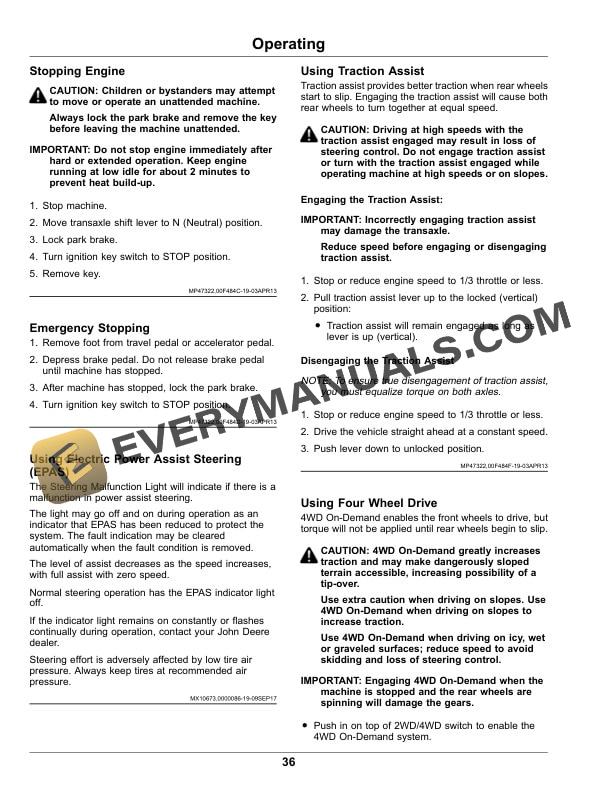
- 8.24. Stopping Engine
- 8.25. Emergency Stopping
- 8.26. Using Electric Power Assist Steering (EPAS)
- 8.27. Using Traction Assist
- 8.28. Using Four Wheel Drive
- 8.29. Using the Cargo Box
- 8.30. Determining Vehicle Load Capacity
- 8.31. Loading the Cargo Box
- 8.32. Emptying Cargo Box
- 8.33. Converting the Cargo Box to a Flat Bed
- 8.34. Converting the Flat Bed to a Cargo Box
- 8.35. Towing Loads
- 8.36. Using Correct Tires and Inflation
- 8.37. Tire Chains
- 8.38. Transporting Machine
- 9. Optional Attachments Kits
- 9.1. Attachments and Kits
- 9.2. Cab Classification According to EN156951 (for Application of Crop Protection Chemicals and Liquid Fertilizer)
- 9.3. Using Quick Clamps
- 9.4. Light Kits
- 9.5. Backup Alarm
- 9.6. Cab Heater
- 9.7. Occupant Protective Structure Rear Screen
- 9.8. Front Receiver Hitch
- 9.9. Cargobox Toolboxes
- 9.10. Using a Trailer
- 10. Service Intervals
- 10.1. Servicing Your Machine
- 10.2. Break In
- 10.3. Every 50 Hours or Annually
- 10.4. Every 100 Hours or Annually (whichever comes first)
- 10.5. Every 200 Hours or Annually (whichever comes first)
- 10.6. Every 400 Hours or 24 Months (whichever comes first)
- 10.7. Every 800 Hours or 24 Months (whichever comes first)
- 10.8. Every 1000 Hours or 24 Months (whichever comes first)
- 11. Service Lubrication
- 11.1. Lubricating Drive Line
- 12. Service Engine
- 12.1. Avoid Fumes
- 12.2. Gasoline Engine Oil
- 12.3. Checking Engine Oil Level
- 12.4. Changing Engine Oil and Filter
- 12.5. Cleaning Dust Unloading Valve
- 12.6. Servicing Air Cleaner Element
- 12.7. Checking Air Intake, Hoses and Clamps
- 12.8. Checking Spark Plug
- 12.9. Cleaning Engine Compartment
- 12.10. Cleaning Radiator Cooling Fins
- 12.11. Checking Coolant Level
- 12.12. Service Cooling System Safely
- 12.13. Servicing Cooling System
- 12.14. Recommended Engine Coolant
- 12.15. Checking Radiator Hoses and Clamps
- 12.16. Inspecting Timing Belt
- 12.17. Inspecting Alternator Belt
- 12.18. Checking Spark Arrestor
- 13. Service Transmission
- 13.1. Transaxle Oil
- 13.2. D Front Differential Oil
- 13.3. Checking 4WD Front Differential Oil Level
- 13.4. Changing 4WD Front Differential Oil
- 13.5. Checking Transaxle Oil Level
- 13.6. Changing Transaxle Oil
- 13.7. Inspecting Driveline CV Boots
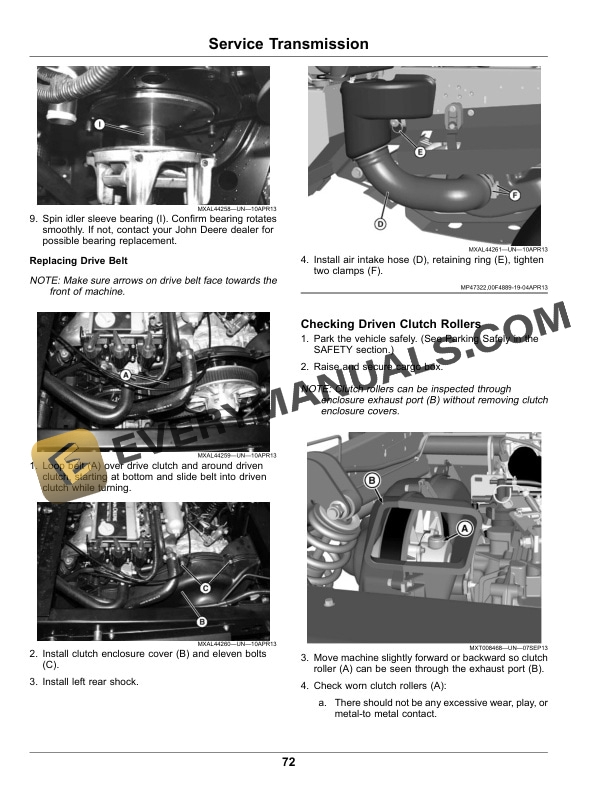
- 13.8. Servicing Drive Belt
- 13.9. Checking Driven Clutch Rollers
- 13.10. Cleaning Primary Drive Clutch and Enclosure
- 14. Service Steering Brakes
- 14.1. Brake Fluid
- 14.2. Checking Brake Fluid Level
- 14.3. Checking Brake Pads
- 14.4. Checking Park Brake Fluid
- 14.5. Checking Brake Lines
- 14.6. Adjusting Park Brake
- 15. Service Electrical
- 15.1. Service the Battery Safely
- 15.2. Checking the Battery (Sealed Batteries)
- 15.3. Removing and Installing Battery
- 15.4. Cleaning Battery and Terminals
- 15.5. Using Booster Battery
- 15.6. Replacing Headlight Bulbs
- 15.7. Adjusting Headlights
- 15.8. Checking and Replacing Fuses
- 16. Service Miscellaneous
- 16.1. Using Proper Fuel and Stabilizer
- 16.2. Filling Fuel Tank
- 16.3. Removing and Installing Wheel Assembly
- 16.4. Removing and Installing Seats
- 16.5. Lifting Machine
- 16.6. Removing and Installing Storage Tray
- 16.7. Inspecting Seat Belt
- 16.8. Inspecting Nets or Doors
- 16.9. Cleaning and Repairing Cargo Box
- 16.10. Checking Fuse Filaments
- 16.11. Replacing Cargo Box Tailgate Bushings
- 16.12. Checking and Adjusting ToeIn
- 16.13. Adjusting Suspension (Standard Shocks)
- 16.14. Cleaning Vehicle Surfaces
- 16.15. Cleaning Plastic Hood and Front Fenders
- 16.16. Cleaning and Repairing Metal Surfaces
- 16.17. Polycarbonate Windshield Maintenance
- 17. Troubleshooting
- 17.1. Using Troubleshooting Chart
- 17.2. Electrical
- 17.3. Cargo Box
- 17.4. Steering
- 18. Storage
- 18.1. Storing Safety
- 18.2. Preparing Machine for Storage
- 18.3. Preparing Fuel and Engine For Storage
- 18.4. Removing Machine From Storage
- 19. Specifications
- 19.1. Drive Train and Travel Speeds
- 19.2. Electrical System
- 19.3. Fuel System
- 19.4. Steering and Brakes
- 19.5. Capacities
- 19.6. Dimensions
- 19.7. Weights
- 19.8. Recommended Lubricants
- 19.9. Sound Measurements
- 20. John Deere Quality Statement
- 20.1. John Deere Quality
- 21. Service Record
- 21.1. Record Service Dates