Description
-
Model List:
- CX130C Crawler Excavator
- 1. GENERAL INFORMATION
- 1.1. Note to the Owner
- 1.2. Intended use
- 1.3. ElectroMagnetic Compatibility (EMC)
- 1.4. Telematics
- 1.5. Manual scope and required training level
- 1.6. Product identification
- 1.7. Operators manual storage on the machine
- 1.8. Machine orientation
- 1.9. Machine components
- 2. SAFETY INFORMATION
- 2.1. Signal word definitions
- 2.2. Safety rules
- 2.3. Ecology and the environment
- 2.4. Hand signals
- 2.5. Safety signs
- 3. CONTROLS AND INSTRUMENTS
- 3.1. Access to operators platform
- 3.1.1. Door and steps
- 3.2. Operators seat
- 3.2.1. Operators seat
- 3.3. Forward controls
- 3.3.1. Forward controls
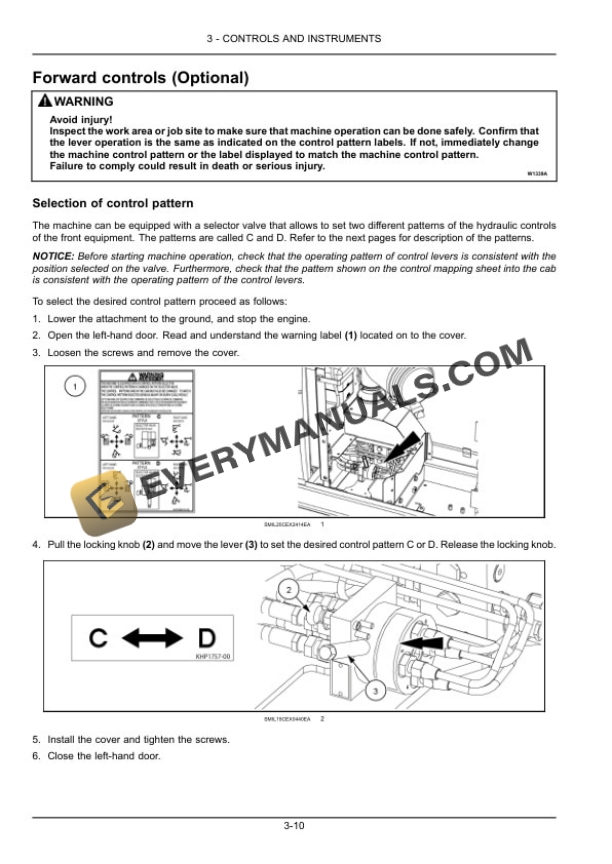
- 3.3.2. Forward controls (Optional)
- 3.3.3. Windshield
- 3.3.4. Front lower window
- 3.4. Lefthand side controls
- 3.4.1. Lefthand side controls
- 3.4.2. Gate lock lever and safety bar
- 3.4.3. Heating, ventilation or airconditioning control
- 3.4.4. Cab internal lighting
- 3.4.5. Emergency exit hammer
- 3.4.6. Sliding windows on door
- 3.5. Righthand side controls
- 3.5.1. Righthand side controls
- 3.5.2. Dozer blade control lever
- 3.5.3. Instrument cluster
- 3.5.4. Radio
- 3.6. Rearward controls
- 3.6.1. Fuse box
- 3.6.2. Magazine rack
- 3.6.3. Refrigerated/heated compartment
- 3.6.4. Storage compartment
- 3.6.5. Coat hanger hook
- 3.7. Overhead controls
- 3.7.1. Roof curtain
- 3.7.2. Roof hatch
- 3.7.3. Sunshield (if equipped)
- 3.8. Exterior controls
- 3.8.1. Cab protection (ROPS and FOPS)
- 3.8.2. Rain deflector (if equipped)
- 3.8.3. Windshield washer reservoir
- 3.8.4. Towing holes
- 3.8.5. Front storage box
- 3.8.6. Fire extinguisher
- 3.8.7. Fuel tank
- 3.8.8. Fuel tank filler pump (if equipped)
- 4. OPERATING INSTRUCTIONS
- 4.1. Starting the unit
- 4.1.1. Antitheft protection
- 4.1.2. Starting the engine
- 4.1.3. Bringing the machine up to operating temperature
- 4.1.4. Operating the machine in hot or cold weather
- 4.1.5. Operating the machine
- 4.1.6. Lowering the attachment in the event of a failure
- 4.1.7. Bucket replacement
- 4.2. Stopping the unit
- 4.2.1. Stopping the engine
- 4.3. Moving the unit
- 4.3.1. Machine travel
- 4.4. Parking the unit
- 4.4.1. Parking the machine
- 5. TRANSPORT OPERATIONS
- 5.1. Road transport
- 5.1.1. Transporting precautions (Machine equipped with long arm)
- 5.1.2. Loading the machine onto a transport trailer
- 5.1.3. Tie downs for shipping
- 5.1.4. Unloading the machine from a transport trailer
- 5.2. Shipping transport
- 5.2.1. Lifting the machine with a crane
- 5.3. Recovery transport
- 5.3.1. Towing the machine
- 6. MAINTENANCE
- 6.1. General information
- 6.1.1. Basic instructions
- 6.1.2. Fluids and lubricants
- 6.1.3. Engine oil recommended operating temperature range
- 6.1.4. Releasing pressure in the hydraulic system
- 6.1.5. Fuel system bleeding
- 6.1.6. Protecting the electronic and electrical systems during battery charging or welding
- 6.2. Maintenance planning
- 6.2.1. Maintenance chart
- 6.3. Breakin period
- 6.3.1. Grease points (Bucket)
- 6.3.2. Cab protection (ROPS and FOPS)
- 6.3.3. Tightening torques
- 6.3.4. Track shoe bolt torque
- 6.3.5. Hydraulic oil return filter
- 6.3.6. Pilot line filter
- 6.3.7. Swing reduction unit oil
- 6.3.8. Travel reduction units oil
- 6.4. Every 10 hours
- 6.4.1. Engine oil level
- 6.4.2. Engine coolant level
- 6.4.3. Hydraulic oil level
- 6.4.4. Fan and alternator drive belt
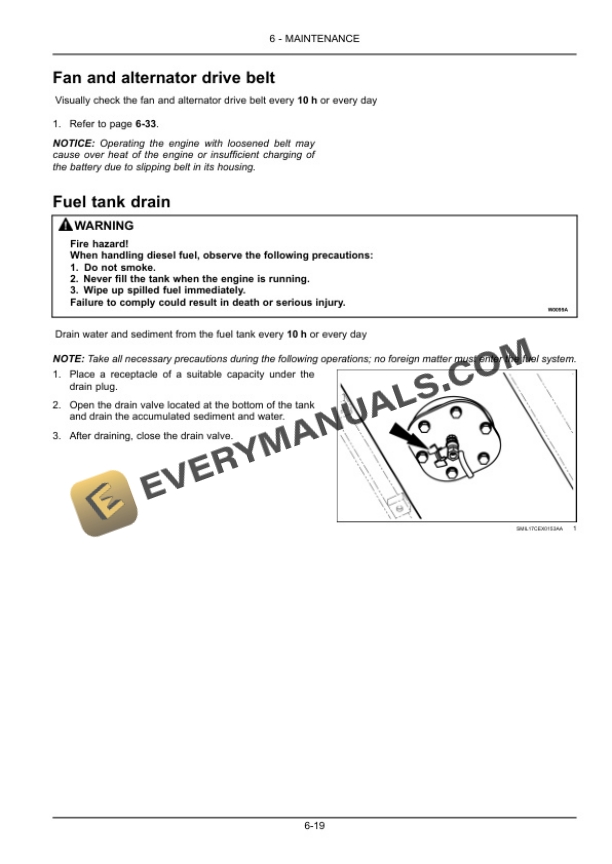
- 6.4.5. Fuel tank drain
- 6.4.6. Fuel prefilters
- 6.5. Every 50 hours
- 6.5.1. Air conditioner filters
- 6.5.2. Grease points (Blade)
- 6.6. Every 250 hours
- 6.6.1. Grease points (Bucket)
- 6.6.2. Swing reduction unit oil
- 6.6.3. Travel reduction units oil
- 6.6.4. Engine primary air filter
- 6.6.5. Battery electrolyte level
- 6.6.6. Fan and alternator drive belt
- 6.6.7. Hydraulic oil tank
- 6.6.8. Tightening torques
- 6.6.9. Track shoe bolt torque
- 6.6.10. Track rollers and idler wheels
- 6.6.11. Cab protection (ROPS and FOPS)
- 6.7. Every 500 hours
- 6.7.1. Turntable bearing
- 6.7.2. Engine oil and filter
- 6.7.3. Fuel prefilter
- 6.7.4. Fuel filter
- 6.7.5. Radiator and coolers
- 6.8. Every 1000 hours
- 6.8.1. Grease points (Boom and arm)
- 6.8.2. Hydraulic tank breather
- 6.8.3. Engine air filters
- 6.8.4. Hydraulic fluid analysis
- 6.8.5. Engine valve rocker clearance adjustment
- 6.8.6. Swing reduction unit oil
- 6.8.7. Travel reduction units oil
- 6.8.8. Alternator
- 6.8.9. Starter motor
- 6.9. Every 2000 hours
- 6.9.1. Hydraulic oil suction filter
- 6.9.2. Hydraulic oil return filter
- 6.9.3. Pilot line filter
- 6.9.4. Air conditioner filters
- 6.9.5. Swing reduction gear
- 6.10. Every 4000 hours
- 6.10.1. Engine coolant
- 6.10.2. Pump outlet hoses
- 6.10.3. Hydraulic hoses
- 6.11. Every 5000 hours
- 6.11.1. Hydraulic oil and filters
- 6.12. When necessary
- 6.12.1. Fuel feed pump
- 6.12.2. Track tension
- 6.12.3. Fuel tank strainer
- 6.12.4. Gas spring inspection
- 6.12.5. Bulb replacement
- 6.12.6. Bucket teeth
- 6.12.7. Cylinders
- 6.12.8. Plastic and resin parts
- 6.12.9. Air conditioning system
- 6.13. Fuse and relay locations
- 6.13.1. Fuses
- 6.14. Storage
- 6.14.1. Preparing for storage
- 6.14.2. Periodic checks
- 6.14.3. Starting up the machine
- 7. TROUBLESHOOTING
- 7.1. Fault code resolution
- 7.1.1. Engine troubleshooting
- 8. SPECIFICATIONS
- 8.1. Machine specifications
- 8.2. Fluids and lubricants
- 8.3. Dimensions
- 8.4. Operating weights
- 9. ACCESSORIES
- 9.1. Direct fit buckets
- 9.2. Auxiliary hydraulic circuits
- 9.3. Hydraulic quick coupling system
- 9.4. Loads handling
- 9.5. Air suspension seat
- 9.6. Front Guard Protective System