
Description
-
Model List:
- DN350 Trailed Spreader
- 1. Contents
- 1.0.1. Recognize Safety Information
- 1.0.2. Understand Signal Words
- 1.0.3. Follow Safety Instructions
- 1.0.4. Prevent Machine Runaway
- 1.0.5. Operate Machine Safely
- 1.0.6. Keep Riders Off Machine
- 1.0.7. Avoid Rollover Accidents
- 1.0.8. Prepare for Emergencies
- 1.0.9. Wear Protective Clothing
- 1.0.10. Use Safety Lights and Devices
- 1.0.11. Transport Safety
- 1.0.12. Tow Loads Safely
- 1.0.13. Service Machine Safely
- 1.0.14. Practice Safe Maintenance
- 1.0.15. Remove Paint Before Welding or Heating
- 1.0.16. Store Attachments Safely
- 1.0.17. Dispose of Waste Properly
- 1.1. Safety Signs
- 1.1.1. Safety Sign Locations
- 1.1.2. Warning Crush and Cutting Hazard
- 1.1.3. Warning Shut Off Engine, Remove Keys
- 1.1.4. Danger HighPressure Hydraulic Fluid
- 1.1.5. Warning Read Operators Manual
- 1.1.6. Warning Falling from Machine
- 1.1.7. Warning Flying Objects
- 1.1.8. Warning Pinching Hazard
- 1.2. Preparing the Tractor
- 1.2.1. Use Your Tractor Operators Manual
- 1.2.2. Front Counterweight
- 1.3. Preparing the Trailed Spreader
- 1.3.1. Tightening Hardware
- 1.3.2. Install Parking Stand
- 1.3.3. Spreader Tires
- 1.3.4. Fitting the Spreading Mechanism
- 1.3.5. Fitting AntiClod Screens
- 1.3.6. Platform and Rear Ladder
- 1.3.7. Hydraulic Circuit
- 1.4. Attaching and Detaching the Trailed Spreader
- 1.4.1. Use Your Tractor Operators Manual
- 1.4.2. Tractor Requirement
- 1.4.3. Hitching Up the Spreader
- 1.4.4. Attaching Trailed Spreader to Tractor
- 1.4.5. Detaching Trailed Spreader from Tractor
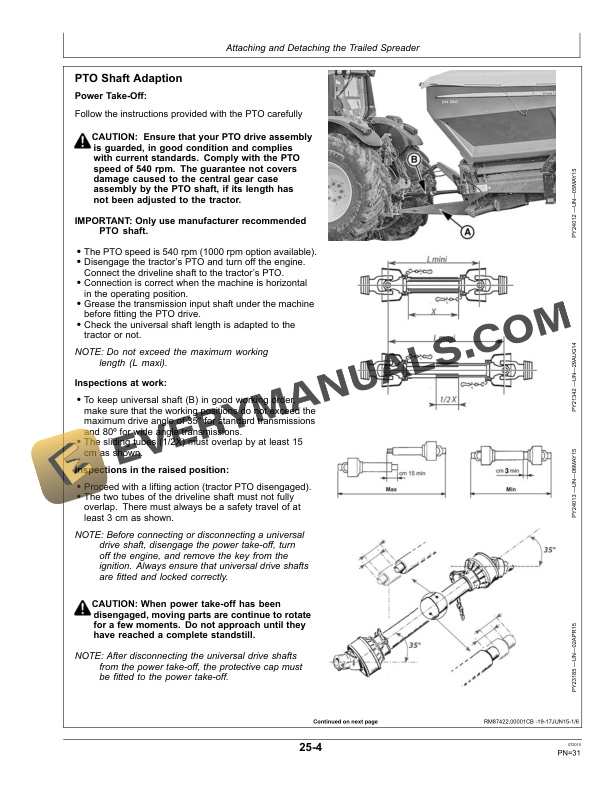
- 1.4.6. PTO Shaft Adaption
- 1.4.7. Hydraulic Connections
- 1.5. Transporting
- 1.5.1. Transport Safely
- 1.5.2. Transporting
- 1.5.3. Transport, Receiving the Equipment and Preparing the Machine
- 1.6. Operating the Trailed Spreader
- 1.6.1. Parking
- 1.6.2. Loading Trailed Spreader Hopper
- 1.6.3. Emptying Spreader Hopper
- 1.7. Adjustments
- 1.7.1. Machine Settings
- 1.7.2. Setting the Application Rate
- 1.7.3. Calibration Test
- 1.7.4. Engaging and Disengaging the Conveyor Belt
- 1.7.5. Forward Speed
- 1.7.6. Adjusting the Width
- 1.7.7. Checking the Width
- 1.7.8. Width Spreading
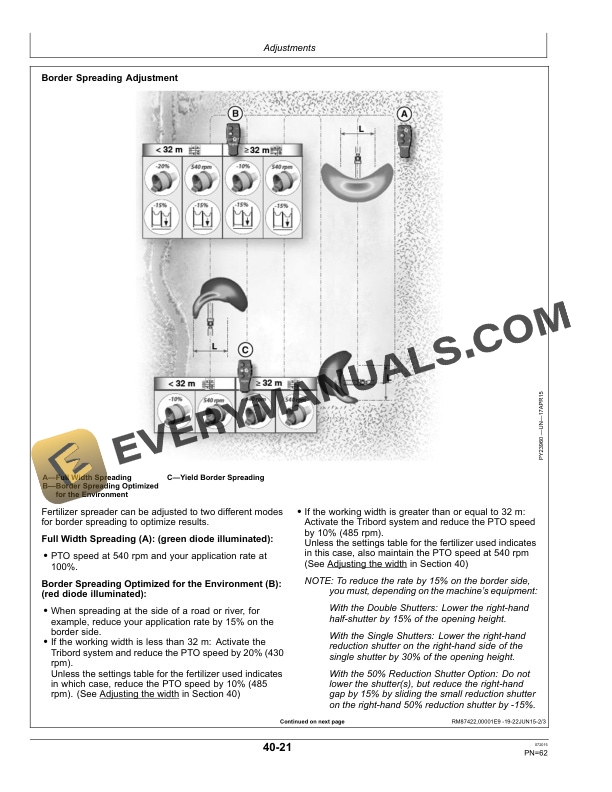
- 1.7.9. Border Setting With the Tribord
- 1.7.10. Environmental Border Optimizing With the Tribord
- 1.7.11. StartUp and PreSettings
- 1.7.12. Border Setting With the Ecobord Vane
- 1.7.13. Hydraulic Retraction
- 1.7.14. Mechanically Driven with Gearbox
- 1.7.15. Mechanically Driven with Belt
- 1.7.16. Rear Separator
- 1.7.17. Hydraulic Drive
- 1.8. Lubrication and Maintenance
- 1.8.1. Safe Lubrication and Maintenance of the Machine
- 1.8.2. Lubrication and Maintenance Procedures
- 1.8.3. Lubrication Symbols
- 1.8.4. Alternative Lubricants
- 1.8.5. Lubrication of Trailed Spreader
- 1.8.6. Drive line Shaft (PTO Shaft)
- 1.8.7. Greasing and Lubrication Points
- 1.8.8. Practice Safe Maintenance
- 1.8.9. Metric Bolt and Screw Torque Values
- 1.8.10. Unified Inch Bolt and Screw Torque Values
- 1.8.11. Supporting Raised Machine
- 1.8.12. Maintenance of Trailed Spreader
- 1.8.13. Maintaining the Drawbar Springs
- 1.8.14. Maintaining the Pneumatic Braking System
- 1.8.15. Checking the Hydraulic Circuit
- 1.8.16. Checking the Calibration
- 1.8.17. Storage
- 1.9. Accessories
- 1.9.1. Rollup Hopper Cover
- 1.9.2. Storage Chest
- 1.9.3. Integral Hydraulic Drainage
- 1.9.4. ClodBreaker Roller
- 1.9.5. BlockBreaker / ClodBreaker
- 1.10. Specifications
- 1.10.1. Specifications
- 1.10.2. Compatibility Chart
- 1.10.3. Serial Number
- 1.10.4. Keep Machines Secure
- 2. Page Number
- 2.1. Section 05
- 2.2. Section 10
- 2.3. Section 15
- 2.4. Section 20
- 2.5. Section 25
- 2.6. Section 30
- 2.7. Section 35
- 2.8. Section 40
- 2.9. Section 45
- 2.10. Section 50
- 2.11. Section 55