


John Deere 2.4L LPG Engine Operator Manual OMRG37502
$30
- Type Of Manual: Operator Manual
- Manual ID: OMRG37502
- Format: PDF
- Size: 3.0MB
- Number of Pages: 94
Description
-
Model List:
- 2.4L LPG Engine
- 1. Contents
- 1.1. Record Keeping
- 1.1.1. Engine Serial Number Plate
- 1.1.2. Record Engine Serial Number
- 1.1.3. Engine Option Codes
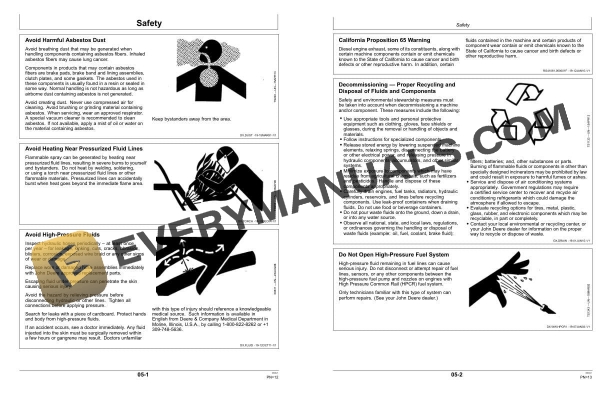
- 1.1.4. Avoid Harmful Asbestos Dust
- 1.1.5. Avoid Heating Near Pressurized Fluid Lines
- 1.1.6. Avoid HighPressure Fluids
- 1.1.7. California Proposition 65 Warning
- 1.1.8. Decommissioning Proper Recycling and Disposal of Fluids and Components
- 1.1.9. Do Not Open HighPressure Fuel System
- 1.1.10. Exhaust Filter Cleaning
- 1.1.11. Follow Safety Instructions
- 1.1.12. Handle Fuel SafelyAvoid Fires
- 1.1.13. Handle Propane Gas Safely
- 1.1.14. Handle Starting Fluid Safely
- 1.1.15. Handling Batteries Safely
- 1.1.16. Illuminate Work Area Safely
- 1.1.17. Install All Guards
- 1.1.18. Live With Safety
- 1.1.19. Prepare for Emergencies
- 1.1.20. Prevent Machine Runaway
- 1.1.21. Recognize Safety Information
- 1.1.22. Remove Paint Before Welding or Heating
- 1.1.23. Replace Safety Signs
- 1.1.24. Park Machine Safely
- 1.1.25. Practice Safe Maintenance
- 1.1.26. Prevent Acid Burns
- 1.1.27. Prevent Battery Explosions
- 1.1.28. Protect Against High Pressure Spray
- 1.1.29. Protect Against Noise
- 1.1.30. Service and Operate Chemical Sprayers Safely
- 1.1.31. Service Cooling System Safely
- 1.1.32. Service Machines Safely
- 1.1.33. Stay Clear of Rotating Drivelines
- 1.1.34. Support Machine Properly
- 1.1.35. Understand Signal Words
- 1.1.36. Use Proper Lifting Equipment
- 1.1.37. Use Proper Tools
- 1.1.38. Use Steps and Handholds Correctly
- 1.1.39. Wear Protective Clothing
- 1.1.40. Work in Clean Area
- 1.1.41. Work In Ventilated Area
- 1.2. Fuels, Lubricants, and Coolant
- 1.2.1. Engine BreakIn Oil
- 1.2.2. Liquefied Petroleum Gas Fuel
- 1.2.3. Handling and Storing LPG Fuel
- 1.2.4. Liquefied Petroleum Gas Engine Oil
- 1.2.5. Mixing of Lubricants
- 1.2.6. Oilscan and CoolScan
- 1.2.7. Lubricant Storage
- 1.2.8. Multipurpose Extreme Pressure (EP) Grease
- 1.2.9. Liquefied Petroleum Gas Engine Coolant
- 1.2.10. Drain Intervals for Engine Coolant
- 1.2.11. Supplemental Coolant Additives
- 1.2.12. Testing Engine Coolant
- 1.2.13. Operating in Warm Temperature Climates
- 1.2.14. Disposing of Coolant
- 1.3. Engine Operating Guidelines
- 1.3.1. Instrument Panel
- 1.3.2. Normal Engine Operation
- 1.3.3. BreakIn Service
- 1.3.4. Starting The Engine
- 1.3.5. Warming Engine
- 1.3.6. Avoid Excessive Engine Idling
- 1.3.7. Stopping the Engine
- 1.3.8. Using a Booster Battery or Charger
- 1.4. Lubrication and Maintenance
- 1.4.1. Required EmissionRelated Information
- 1.4.2. Observe Service Intervals
- 1.4.3. Use Correct Fuels, Lubricants, and Coolant
- 1.4.4. Lubrication and Maintenance Service Interval ChartStandard Industrial Engines
- 1.5. Lubrication Maintenance/Daily
- 1.5.1. Daily Prestarting Checks
- 1.6. Lubrication Maintenance/500 Hour/12 Month
- 1.6.1. Changing Engine Oil and Replacing Filter
- 1.6.2. Cleaning Crankcase Vent Hose
- 1.6.3. Checking Air Intake System
- 1.6.4. Check Engine Speeds
- 1.6.5. Checking Belt Tensioner Spring Tension and Belt Wear (Automatic Tensioner)
- 1.6.6. Checking Engine Electrical Ground Connections
- 1.6.7. Servicing Fire Extinguisher
- 1.6.8. Checking Engine Mounts
- 1.6.9. Servicing Battery
- 1.6.10. Checking Cooling System
- 1.6.11. Replenishing Supplemental Coolant Additives (SCAs) Between Coolant Changes
- 1.6.12. Testing Engine Coolant
- 1.6.13. Pressure Testing Cooling System
- 1.7. Lubrication Maint./2000 Hour/24 Month
- 1.7.1. Replacing Spark Plugs
- 1.7.2. Flushing and Refilling Cooling System
- 1.7.3. Testing Thermostats Opening Temperature
- 1.8. Service as Required
- 1.8.1. Additional Service Information
- 1.8.2. Adding Coolant
- 1.8.3. Replacing Air Cleaner Filter Element
- 1.8.4. Replacing Fan and Alternator Belt
- 1.8.5. Checking Fuses
- 1.9. Troubleshooting
- 1.9.1. General Troubleshooting Information
- 1.9.2. Precautions For Welding
- 1.9.3. Precautions for Electrical System When Steam Cleaning Engine
- 1.9.4. Displaying Of Diagnostic Trouble Codes (DTCs)
- 1.9.5. Listing of Diagnostic Trouble Codes (DTCs)
- 1.9.6. Intermittent Fault Diagnostics (With Electronic Controls)
- 1.9.7. Electrical System Layout
- 1.9.8. Engine Troubleshooting
- 1.10. Storage
- 1.10.1. Engine Storage Guidelines
- 1.10.2. Preparing Engine for Long Term Storage
- 1.10.3. Removing Engine from Long Term Storage
- 1.11. Specifications
- 1.11.1. General Engine Specifications
- 1.11.2. Engine Power Rating and Speed Specifications
- 1.11.3. Unified Inch Bolt and Screw Torque Values
- 1.11.4. Metric Bolt and Screw Torque Values
- 1.12. Lubrication and Maintenance Records
- 1.12.1. Using Lubrication and Maintenance Records
- 1.12.2. Daily (Prestarting) Service
- 1.12.3. Hour/12 Month Service
- 1.12.4. Hour/24 Month Service
- 1.12.5. Service as Required
- 1.13. Warranty
- 1.13.1. John Deere Warranty in OEM Applications
- 1.13.2. John Deere Emissions Control Warranty Statement
- 1.13.3. Emissions Control System Certification Label
- 1.14. John Deere Service Literature Available
- 1.14.1. Technical Information
- 2. Page Number
- 2.1. Section 01
- 2.2. Section 05
- 2.3. Section 10
- 2.4. Section 15
- 2.5. Section 20
- 2.6. Section 25
- 2.7. Section 30
- 2.8. Section 35
- 2.9. Section 40
- 2.10. Section 45
- 2.11. Section 50
- 2.12. Section 55
- 2.13. Section 60
- 2.14. Section 65
- 2.15. Section 70
Related products
-50%

Original price was: $20.$10Current price is: $10.

-50%

Original price was: $20.$10Current price is: $10.

-50%

Original price was: $20.$10Current price is: $10.

-50%

Original price was: $20.$10Current price is: $10.
-50%

Original price was: $20.$10Current price is: $10.