
John Deere 1512E, 1810E, 1814E, 2112E Ejector Scraper Operator Manual OMCM2040
$30
- Type Of Manual: Operator Manual
- Manual ID: OMCM2040
- Format: PDF
- Size: 2.1MB
- Number of Pages: 94
Description
-
Model List:
- 1512E Ejector Scraper
- 1810E Ejector Scraper
- 1814E Ejector Scraper
- 2112E Ejector Scraper
- 1. Contents
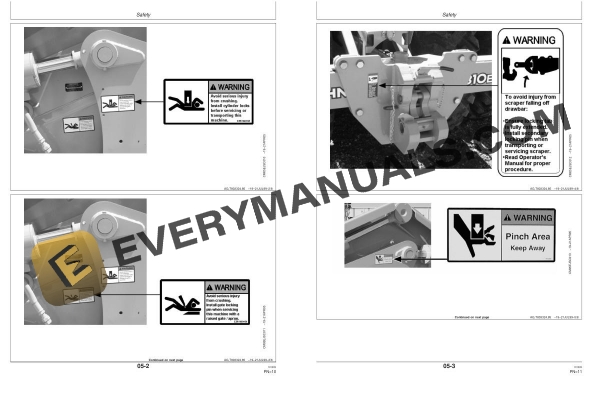
- 1.0.1. Safety Signs
- 1.0.2. Recognize Safety Information
- 1.0.3. Understand Signal Words
- 1.0.4. Follow Safety Instructions
- 1.0.5. Use Proper Tools
- 1.0.6. Lockup System
- 1.0.7. Check Tire Pressure
- 1.0.8. Stay Clear of Moving Tractor
- 1.0.9. Operate Safely
- 1.0.10. Support Raised Equipment
- 1.0.11. Store Attachments Safely
- 1.0.12. Keep Riders Off Machine
- 1.0.13. Wear Protective Clothing
- 1.0.14. Handle Fuel SafelyPrevent Fires
- 1.0.15. Prepare for Emergencies
- 1.0.16. Handle Agricultural Chemicals Safely
- 1.0.17. Use Safety Lights and Devices
- 1.0.18. Transport Safely
- 1.0.19. Practice Safe Maintenance
- 1.0.20. Remove Paint Before Welding or Heating
- 1.0.21. Avoid Heating Near Pressurized Fluid Lines
- 1.0.22. Avoid HighPressure Fluids
- 1.0.23. Accumulator Warning
- 1.0.24. Protect Against High Pressure Spray
- 1.0.25. Dispose of Waste Properly
- 1.1. Initial Inspection
- 1.1.1. Initial Inspection
- 1.2. Preparing the Tractor
- 1.2.1. Matching Tractor to Scraper
- 1.2.2. Recommendations for Tractor Setup
- 1.2.3. Tractor Hydraulic System
- 1.2.4. Install Scraper Drawbar
- 1.2.5. Ballast Recommendations
- 1.3. Attaching Scraper to Tractor
- 1.3.1. General Information
- 1.3.2. Marking Proper Hose Connections
- 1.3.3. Attaching Scraper to Tractor
- 1.3.4. Removing Standard Agricultural Drawbar Installing Scraper Drawbar
- 1.3.5. Connect Warning Light Plug
- 1.3.6. Connecting the Scraper to the Quick Attach Drawbar or Quick Attach Hitch
- 1.3.7. Disconnecting the Scraper from the Quick Attach Drawbar or Rear Quick Attach Hitch
- 1.3.8. Hitching Rear Scraper to Front Scraper
- 1.3.9. Setting Proper Hitch Height of Scraper
- 1.3.10. How To Adjust Hitch Height
- 1.4. Preparing the Scraper
- 1.4.1. Cutting Edges
- 1.4.2. JAGZ Blades
- 1.4.3. Leveling the Blade (Cutting Edge)
- 1.4.4. Setting the Router Bits
- 1.4.5. To Adjust Router Bits
- 1.4.6. Roller Adjustment
- 1.5. Transporting the Machine
- 1.5.1. Positioning Tractor Drawbar for Transport
- 1.5.2. Attach Warning Light Plug
- 1.5.3. Transporting the Machine
- 1.5.4. Lockups
- 1.6. Detaching Process
- 1.6.1. Detaching Scraper from Tractor
- 1.6.2. Detaching Process
- 1.7. Operating the Scraper
- 1.7.1. Operating the Tractor Safely
- 1.7.2. Shift to Low Gear on Hillsides
- 1.7.3. Use Caution on Hillsides
- 1.7.4. Overload Conditions
- 1.7.5. Loading the Scraper(s)
- 1.7.6. Protecting the Tractor Tires
- 1.7.7. Offset Wheel Frame Design
- 1.7.8. Effective Scraper Traffic Patterns
- 1.7.9. Using Tandem Scrapers
- 1.7.10. Controlling Soil Moisture
- 1.7.11. Finishing the Field (Manual Control)
- 1.7.12. Soil Damaged Caused by Leveling
- 1.7.13. Top Loading Scrapers Requires Caution
- 1.8. Troubleshooting
- 1.8.1. Operational Problems
- 1.8.2. Operational Problems
- 1.8.3. Operational Problems
- 1.8.4. Operational Problems
- 1.9. Crime Prevention Tips
- 1.9.1. Help Prevent Crime
- 1.9.2. Record Identification Numbers
- 1.9.3. Keep Proof of Ownership
- 1.9.4. Park Indoors Out of Sight
- 1.9.5. When Parking Outdoors
- 1.9.6. Reduce Vandalism
- 1.9.7. Report Thefts Immediately
- 1.10. Specifications
- 1.10.1. Specifications
- 1.10.2. Optional Equipment
- 1.10.3. Metric Bolt and Cap Screw Torque Values
- 1.10.4. Unified Inch Bolt and Cap Screw Torque Values
- 1.11. Lubrication and Maintenance Charts
- 1.11.1. Periodic Maintenance
- 1.11.2. Recommended Daily Inspection
- 1.11.3. Hour Service
- 1.12. John Deere Service Literature Available
- 1.12.1. Technical Information
- 1.13. John Deere Service Keeps You On The Job
- 1.13.1. John Deere Is At Your Service
- 2. Page Numbers
- 2.1. Section 05
Related products
-50%

Original price was: $20.$10Current price is: $10.

-50%

Original price was: $20.$10Current price is: $10.

-50%

Original price was: $20.$10Current price is: $10.
-50%

Original price was: $20.$10Current price is: $10.