

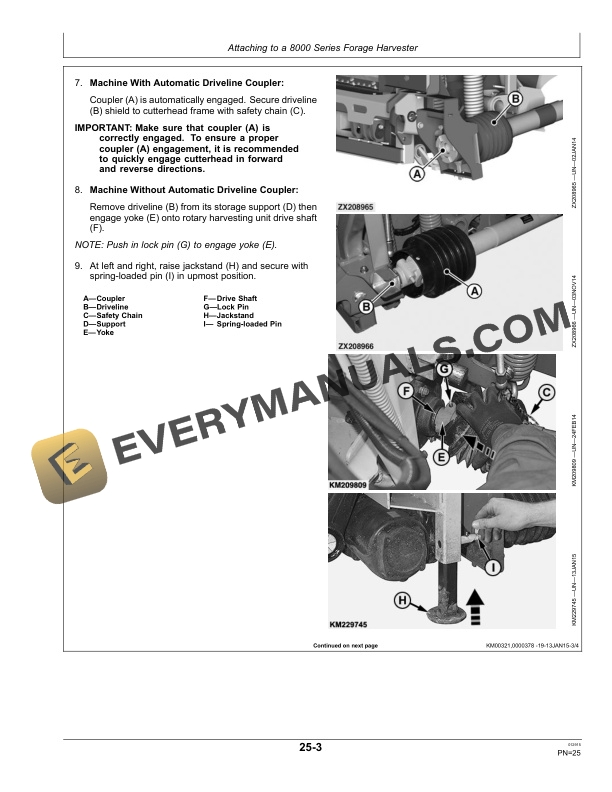
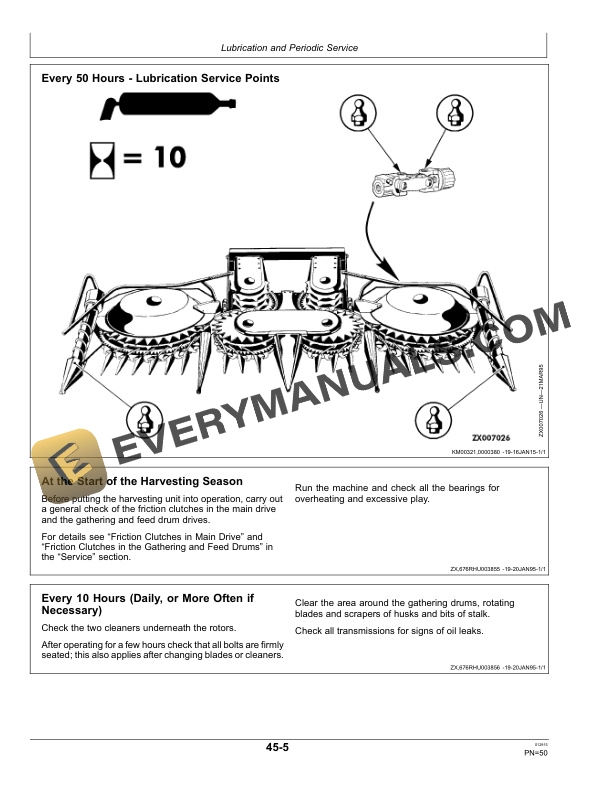
John Deere 676 Rotary Harvesting Unit Operator Manual OMLCA113181
$30
- Type Of Manual: Operator Manual
- Manual ID: OMLCA113181
- Format: PDF
- Size: 2.6MB
- Number of Pages: 76
Description
-
Model List:
- 676 Rotary Harvesting Unit
- 1. Contents
- 1.1. Identification View
- 1.1.1. Identification View
- 1.1.2. Recognize Safety Information
- 1.1.3. Follow Safety Instructions
- 1.1.4. Understand Signal Words
- 1.1.5. Observe Road Traffic Regulations
- 1.1.6. Use Safety Lights and Devices
- 1.1.7. Prepare for Emergencies
- 1.1.8. Wear Protective Clothing
- 1.1.9. Check Machine Safety
- 1.1.10. Guards and Shields
- 1.1.11. Stay Clear of Harvesting Units
- 1.1.12. Keep Hands Away From Knives
- 1.1.13. Store Attachments Safely
- 1.1.14. Practice Safe Maintenance
- 1.1.15. Stay Clear of Rotating Drivelines
- 1.1.16. Service Machines Safely
- 1.1.17. Support Machine Properly
- 1.1.18. Avoid HighPressure Fluids
- 1.1.19. Transport With Harvesting Unit Installed
- 1.1.20. Ballasting for Safe Ground Contact
- 1.1.21. Remove Paint Before Welding or Heating
- 1.1.22. Dispose of Waste Properly
- 1.2. Safety Decals
- 1.2.1. Safety Decals
- 1.3. Preparing the 7000 Series Forage Harvester
- 1.3.1. Before Attaching the Harvesting Unit
- 1.4. Attaching to a 7000 Series Forage Harvester
- 1.4.1. Attaching and Detaching the Harvesting Unit
- 1.4.2. Locking the Harvesting Unit
- 1.4.3. Drive Shaft
- 1.4.4. Connecting the Hydraulic System
- 1.4.5. Electrical Connection for Blade Rotor Brake
- 1.5. Attaching to a 8000 Series Forage Harvester
- 1.5.1. Attaching the Rotary Harvesting Unit
- 1.5.2. Detaching the Rotary Harvesting Unit
- 1.6. Transport
- 1.6.1. Special Road Regulations
- 1.6.2. Hanging Points
- 1.6.3. Folding the Harvesting Unit
- 1.7. Operating the Rotary Harvesting Unit
- 1.7.1. Method of Operation, 676 Rotary Harvesting Unit
- 1.7.2. Removing Tensioner Strap
- 1.7.3. Adjusting the Feed Bar
- 1.7.4. Skid Plates
- 1.7.5. Blade Rotor Brake
- 1.7.6. Operating the Harvesting Unit
- 1.7.7. Harvesting DownCrop
- 1.7.8. Harvesting ShortStemmed Corn
- 1.7.9. Harvesting WholeCrop Silage (WCS)
- 1.7.10. Adjusting Length of CutCharts
- 1.8. Troubleshooting
- 1.8.1. Rotary Harvesting Unit
- 1.9. Lubrication and Periodic Service
- 1.9.1. Service Intervals
- 1.9.2. Gear Oil
- 1.9.3. Main Drive Friction Clutch Coolant (Optional)
- 1.9.4. Alternative and Synthetic Lubricants
- 1.9.5. Transmissions of 676 Rotary Harvesting Unit
- 1.9.6. Every 10 Hours Lubrication Service Points
- 1.9.7. Every 10 Hours Automatic Driveline Coupler (8000 Series Forage Harvesters)
- 1.9.8. Every 50 Hours Lubrication Service Points
- 1.9.9. At the Start of the Harvesting Season
- 1.9.10. Every 10 Hours (Daily, or More Often if Necessary)
- 1.9.11. Every 50 Hours (Once a Week)
- 1.9.12. Every 2 or 3 YearsMain Drive Friction Clutch Coolant (Optional)
- 1.9.13. EndofSeason Service
- 1.10. Service
- 1.10.1. Metric Bolt and Screw Torque Values
- 1.10.2. Main Drive Friction Clutches
- 1.10.3. Main Drive Friction ClutchesWater Cooled (Optional)
- 1.10.4. Friction Clutches in the Gathering and Feed Drums
- 1.10.5. Intake and Cutting Area
- 1.10.6. Crop Feed Area
- 1.10.7. Drive for DownCrop Auger
- 1.10.8. Cleaning Rotary Harvesting Unit
- 1.11. Storage
- 1.11.1. Storage at the End of the Harvesting Season
- 1.11.2. Removing from Storage at Start of Season
- 1.12. Specifications
- 1.12.1. Specifications
- 1.13. Serial Number
- 1.13.1. Serial Number
- 1.14. Crime Prevention
- 1.14.1. Keep Proof of Ownership
- 1.14.2. Keep Machines Secure
- 1.15. John Deere Service Literature Available
- 1.15.1. Technical Information
- 1.16. John Deere Keeps You on the Job
- 1.16.1. John Deere Is At Your Service
- 2. Page Number
- 2.1. Section 00
- 2.2. Section 05
- 2.3. Section 10
- 2.4. Section 15
- 2.5. Section 20
- 2.6. Section 25
- 2.7. Section 30
- 2.8. Section 35
- 2.9. Section 40
- 2.10. Section 45
- 2.11. Section 50
- 2.12. Section 55
- 2.13. Section 60
- 2.14. Section 65
- 2.15. Section 70
Related products
-50%

Original price was: $20.$10Current price is: $10.

-50%

Original price was: $20.$10Current price is: $10.
-50%

Original price was: $20.$10Current price is: $10.
-50%

Original price was: $20.$10Current price is: $10.