
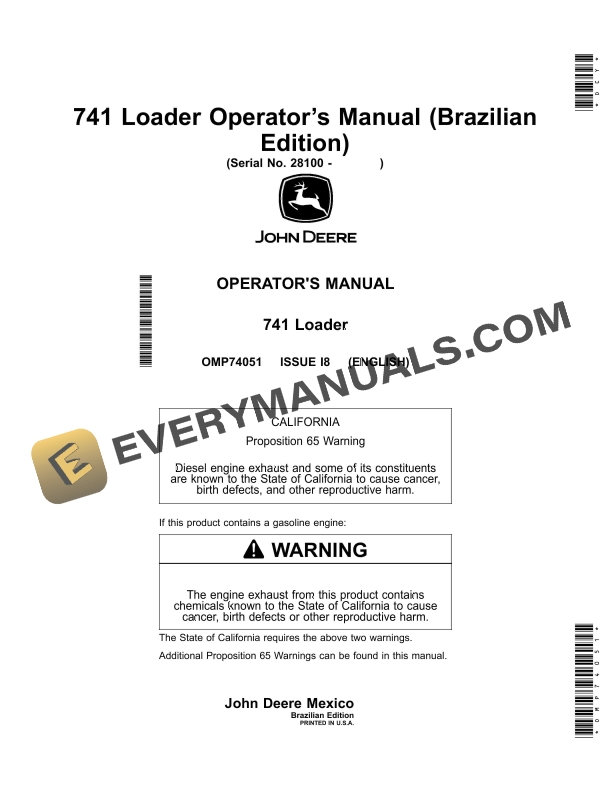
John Deere 741 Loader Operator Manual OMP74051
$30
- Type Of Manual: Operator Manual
- Manual ID: OMP74051
- Format: PDF
- Size: 3.8MB
- Number of Pages: 72
Description
-
Model List:
- 741 Loader
- 1. Introduction
- 1.1. Foreword
- 2. General Information
- 2.1. Machine Overview
- 2.2. Product View
- 2.3. Trademarks
- 2.4. Abbreviations
- 2.5. Regions and Country Versions
- 2.6. Dealers Record
- 2.7. Predelivery
- 2.8. Delivery
- 2.9. AfterSale
- 2.10. Record Product Identification Number
- 2.11. Keep Proof of Ownership
- 2.12. Keep Machines Secure
- 2.13. Recognize Safety Information
- 2.14. Understand Signal Words
- 2.15. Follow Safety Instructions
- 2.16. Prepare for Emergencies
- 2.17. Wear Protective Clothing
- 2.18. Park Machine Safely
- 2.19. Protect People and Animals
- 2.20. Operating the Loader Tractor Safely
- 2.21. Use Seat Belt Properly
- 2.22. Use Foldable ROPS and Seat Belt Properly
- 2.23. Use Caution on Slopes, Uneven Terrain, and Rough Ground
- 2.24. Avoid Injury or Death from Falling Loads
- 2.25. Carry Materials Safely
- 2.26. Transporting Round Bales Safely
- 2.27. Operate Grapple (If Equipped)
- 2.27.1. Avoid Injury or Death from Falling Round Bales
- 2.27.2. How to Pick Up a Round Bale
- 2.27.3. How to Pick Up a Round Bale on a Slope
- 2.27.4. How to Transport a Round Bale
- 2.27.5. How to Remove Material from a Pile
- 2.28. Driving on Public Roads
- 2.29. Operating Loader with Attachments from Other Manufacturers
- 2.30. Operate Bucket/Attachment Safely
- 2.31. Operating NonSelfLevelling Loaders
- 2.32. Avoid Power Lines
- 2.33. Dig Safely
- 2.34. Detach Loader Safely
- 2.35. Use Safety Lights and Devices
- 2.36. Practice Safe Maintenance
- 2.37. Service Loader Safely
- 2.38. Service Machines Safely
- 2.39. Service Accumulator Systems Safely
- 2.40. Avoid Heating Near Pressurized Fluid Lines
- 2.41. Check Hoses for Damage
- 2.42. Avoid HighPressure Fluids
- 2.43. Remove Paint Before Welding or Heating
- 2.44. Decommissioning Proper Recycling and Disposal of Fluids and Components
- 3. Safety Signs
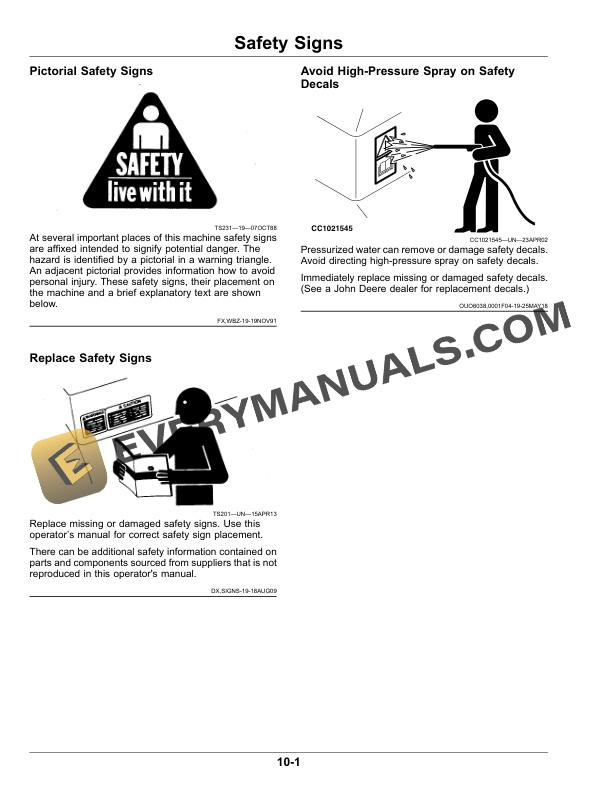
- 3.1. Pictorial Safety Signs
- 3.2. Replace Safety Signs
- 3.3. Avoid HighPressure Spray on Safety Decals
- 3.4. Ballast Box
- 3.5. Accumulator
- 3.6. Multicoupler
- 4. Prepare Tractor
- 4.1. Prepare the Tractor
- 4.2. Approved Tractors
- 4.3. Rear Ballast
- 4.4. Front Tire Load Index and Rear Ballast Requirements2WD Tractors
- 4.5. Front Tire Load Index and Rear Ballast RequirementsMFWD Tractors
- 4.6. Remove Front Weights
- 4.7. Front Tread Settings
- 4.8. Front Tread Setting7000 Series MFWD Tractors without Fenders
- 4.9. Rear Tread Settings
- 4.10. Adjust EICV Flow Rate and Shut Off Time (6X20, 6X30, 7X20, and 7X30 Series Tractors)
- 5. Detach Loader
- 5.1. Detach Loader
- 6. Attach Loader
- 6.1. Attach Loader
- 7. Transport
- 7.1. Keep Riders Off Machine
- 7.2. Driving on Public Roads
- 7.3. Carry Loads
- 8. Operate Loader
- 8.1. Raise and Lower Loader
- 8.2. Remove Material from a Pile
- 8.3. Dump Bucket
- 8.4. Level Bucket
- 8.5. Level and Scrape Forward
- 8.6. Level in Reverse
- 8.7. Operate Grapple (If Equipped)
- 8.7.1. Avoid Injury or Death from Falling Round Bales
- 8.7.2. How to Pick Up a Round Bale
- 8.7.3. How to Pick Up a Round Bale on a Slope
- 8.7.4. How to Transport a Round Bale
- 8.7.5. How to Remove Material from a Pile
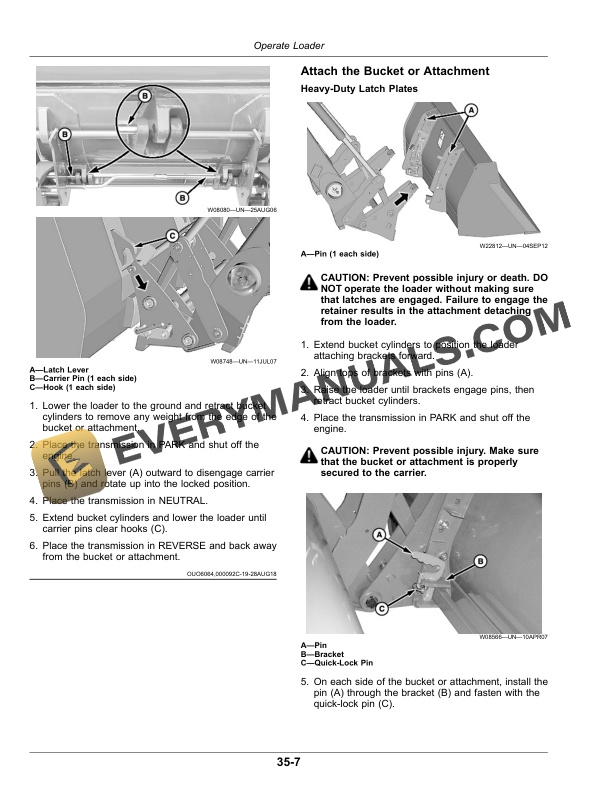
- 8.8. Detach the Bucket or Attachment
- 8.8.1. HeavyDuty Latch Plates
- 8.8.2. Global Carrier (Manual)
- 8.9. Attach the Bucket or Attachment
- 8.9.1. HeavyDuty Latch Plates
- 8.9.2. Global Carrier (Manual)
- 8.10. Attachments Available
- 9. Lubrication and Maintenance
- 9.1. Lubricate and Service Loader Safely
- 9.2. Perform Lubrication and Maintenance
- 9.3. Observe Lubrication Symbols
- 9.4. Multipurpose Extreme Pressure (EP) Grease
- 9.5. Alternative and Synthetic Lubricants
- 9.6. First 10 Hours
- 9.7. Every 10 Hours
- 9.7.1. Standard Loader
- 9.7.2. Mechanical SelfLeveling Loader
- 9.7.3. Global CarrierLatch Pins
- 9.8. Every 50 Hours
- 10. Service
- 10.1. Service Loader and Tractor Safely
- 10.2. Work in Clean Area
- 10.3. Avoid HighPressure Fluids
- 10.4. ORing Installation
- 10.5. Tighten Hydraulic Fittings and Hoses
- 10.6. Replace Hydraulic Hoses, Couplers, Tubing, or Connectors
- 10.7. Access Front of Tractor
- 10.8. Identify Hose ConnectionsLoader to MidMount Couplers and Valve
- 10.9. Identify Hose ConnectionsLoader to Valves at Rear of Tractor
- 10.10. Metric Bolt and Screw Torque Values
- 10.11. Unified Inch Bolt and Screw Torque Values
- 11. Assembly
- 11.1. Perform Predelivery Service Safely
- 11.2. Installation Instructions Available Online to John Deere Dealers
- 11.3. Recommended Setup Assembly Sequence
- 11.4. Prepare the Tractor
- 11.5. Prepare the Loader
- 11.6. Position Loader on Mounting Frames
- 11.7. Install Bucket or Attachment
- 11.8. Install TextFree Safety Decals
- 11.9. Final Inspection and Adjustments
- 11.10. Install Optional Equipment and Attachments
- 12. John Deere Service Keeps You On The Job
- 12.1. John Deere Parts
- 12.2. The Right Tools
- 12.3. WellTrained Technicians
- 12.4. Prompt Service
Related products
-50%

Original price was: $20.$10Current price is: $10.
-50%

Original price was: $20.$10Current price is: $10.
-50%

Original price was: $20.$10Current price is: $10.
-50%

Original price was: $20.$10Current price is: $10.


-50%

Original price was: $20.$10Current price is: $10.
-50%

Original price was: $20.$10Current price is: $10.