


John Deere PowerTech 8.1 L 6081HFN01, HFN02, HFN03 Compressed Natural Gas Engines Operator Manual OMRG23552
$30
- Type Of Manual: Operator Manual
- Manual ID: OMRG23552
- Format: PDF
- Size: 7.0MB
- Number of Pages: 90
Description
-
Model List:
- PowerTech 8.1 L 6081HFN01 Compressed Natural Gas Engine
- PowerTech 8.1 L 6081HFN02 Compressed Natural Gas Engine
- PowerTech 8.1 L 6081HFN03 Compressed Natural Gas Engine
- 1. Contents
- 1.1. Identification Numbers
- 1.1.1. Record Engine Serial Number
- 1.1.2. Engine Identification Tags
- 1.1.3. Engine Option Codes
- 1.1.4. Handle Compressed Natural Gas Safely
- 1.1.5. Recognize Safety Information
- 1.1.6. Understand Signal Words
- 1.1.7. Follow Safety Instructions
- 1.1.8. Replace Safety Signs
- 1.1.9. Illuminate Work Area Safely
- 1.1.10. Work in Clean Area
- 1.1.11. Use Proper Tools
- 1.1.12. Live With Safety
- 1.1.13. Prevent Machine Runaway
- 1.1.14. Handle Fuel SafelyAvoid Fires
- 1.1.15. Prepare for Emergencies
- 1.1.16. Handle Starting Fluid Safely
- 1.1.17. In Case of Fire
- 1.1.18. Handle Fluids SafelyAvoid Fires
- 1.1.19. Avoid Static Electricity Risk When Refueling
- 1.1.20. Service Machines Safely
- 1.1.21. Wear Protective Clothing
- 1.1.22. Protect Against Noise
- 1.1.23. Handling Batteries Safely
- 1.1.24. Prevent Acid Burns
- 1.1.25. Stay Clear of Rotating Drivelines
- 1.1.26. Install All Guards
- 1.1.27. Practice Safe Maintenance
- 1.1.28. Remove Paint Before Welding or Heating
- 1.1.29. Avoid Heating Near Pressurized Fluid Lines
- 1.1.30. Avoid HighPressure Fluids
- 1.1.31. Do Not Open HighPressure Fuel System
- 1.1.32. Protect Against High Pressure Spray
- 1.1.33. Prevent Battery Explosions
- 1.1.34. Avoid Hot Exhaust
- 1.1.35. Work In Ventilated Area
- 1.1.36. Service Cooling System Safely
- 1.1.37. Decommissioning Proper Recycling and Disposal of Fluids and Components
- 1.2. Fuels, Lubricants, and Coolants
- 1.2.1. Natural Gas Recommendations
- 1.2.2. Engine BreakIn Oil
- 1.2.3. Natural Gas Engine Oil
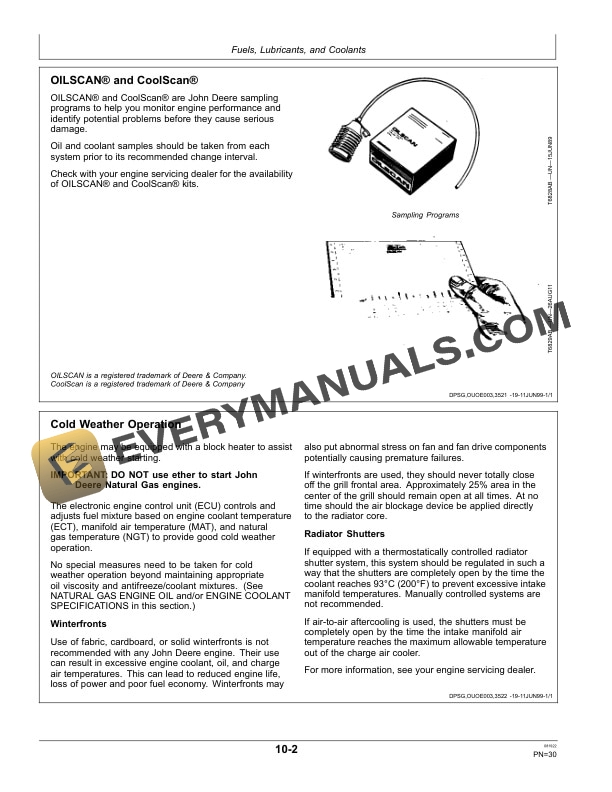
- 1.2.4. OILSCANOILSCAN is a registered trademark of Deere Company. and CoolScanCoolScan is a registered trademark of Deere Company
- 1.2.5. Cold Weather Operation
- 1.2.6. Alternative and Synthetic Lubricants
- 1.2.7. Lubricant Storage
- 1.2.8. Mixing of Lubricants
- 1.2.9. Multipurpose Extreme Pressure (EP) Grease
- 1.2.10. Recommended Engine Coolant
- 1.2.11. Engine Coolant Specifications
- 1.2.12. Testing Engine Coolant
- 1.2.13. Supplemental Coolant Additives
- 1.2.14. Operating in Warm Temperature Climates
- 1.2.15. Disposing of Coolant
- 1.3. Operating the Engine
- 1.3.1. Engine BreakIn
- 1.3.2. Starting the Engine
- 1.3.3. Warming the Engine
- 1.3.4. Changing Engine Speed
- 1.3.5. Idling the Engine
- 1.3.6. Stopping the Engine
- 1.3.7. Using a Booster Battery or Charger
- 1.4. Lubrication and Maintenance
- 1.4.1. Observe Service Intervals
- 1.4.2. Use Correct Fuels, Lubricants, and Coolants
- 1.4.3. Lubrication and Maintenance Service Interval Chart
- 1.5. Lubrication and MaintenanceDaily
- 1.5.1. Daily Lubrication and Maintenance
- 1.6. Lubrication Maint./12 Months/25,000 Miles
- 1.6.1. Lubrication and Maintenance12 Months/25,000 Miles
- 1.6.2. Changing Engine Oil and Filter
- 1.6.3. Servicing Battery
- 1.6.4. Checking Belt Tensioner
- 1.6.5. Visually Inspecting Water Pump
- 1.6.6. Inspecting Natural Gas Filter Element (Early Engines with BoxType Regulator)
- 1.6.7. Checking Air Intake System
- 1.6.8. Checking Cooling System
- 1.6.9. Checking Effectiveness of Coolant Solution
- 1.6.10. Replenishing Supplemental Coolant Additives (SCAs) Between Coolant Changes
- 1.6.11. Cleaning and Adjusting Spark Plug Gap
- 1.7. Lubrication Maint./24 Months/50,000 Miles
- 1.7.1. Lubrication and Maintenance24 Months/50,000 Miles
- 1.7.2. Cleaning Crankcase Vent Tube
- 1.7.3. Replacing Natural Gas Filter Element (Early Engines with BoxType Regulator)
- 1.7.4. Checking Crankshaft Vibration Damper
- 1.7.5. Inspecting Natural Gas Lines
- 1.7.6. Pressure Testing Cooling System
- 1.7.7. Flushing Cooling System
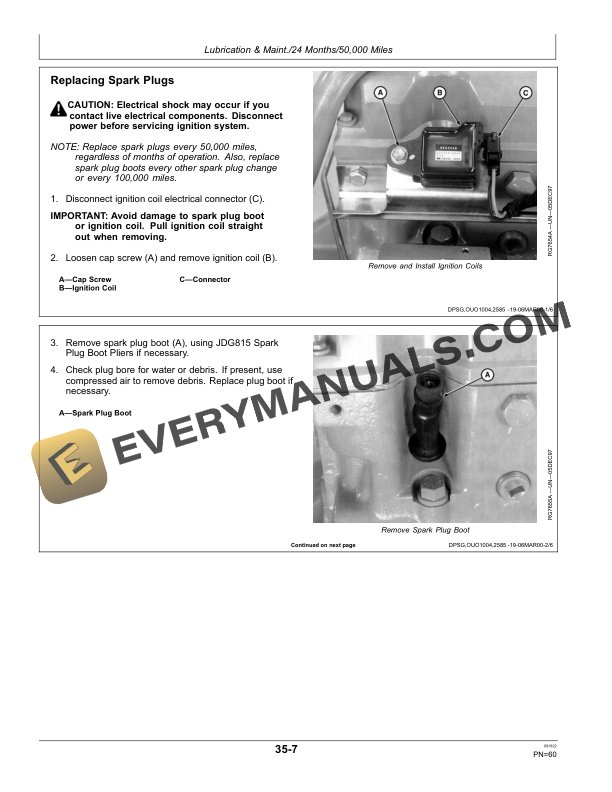
- 1.7.8. Replacing Spark Plugs
- 1.7.9. Inspecting Air Compressor
- 1.7.10. Checking and Adjusting Valve Clearance
- 1.8. Service as Required
- 1.8.1. Additional Service Information
- 1.8.2. Replacing Belts
- 1.8.3. Replacing Air Cleaner Elements
- 1.8.4. Adding Coolant
- 1.8.5. Precautions for Welding on Vehicles Equipped with Electronic Engine Control Unit (ECU)
- 1.8.6. Retorque Exhaust Manifold and Intake Manifold
- 1.9. Troubleshooting
- 1.9.1. Diagnostic Overview
- 1.9.2. Reading Diagnostic Trouble Codes
- 1.9.3. Diagnostic Trouble Codes
- 1.10. Storage
- 1.10.1. Storing the Engine
- 1.10.2. Removing Engine from Storage
- 1.11. Specifications
- 1.11.1. Engine Specifications
- 1.12. Lubrication and Maintenance Records
- 1.12.1. Using Lubrication and Maintenance Records
- 1.12.2. Daily (Prestarting) Service
- 1.12.3. Months/12,500 Miles Service
- 1.12.4. Months/25,000 Miles Service
- 1.12.5. Months/50,000 Miles Service
- 1.12.6. Service as Required
- 1.13. Emissions System Warranty
- 1.13.1. John Deere Warranty in OEM Applications
- 1.13.2. Emissions System Label
- 1.13.3. Emissions Control Warranty Statement
- 1.13.4. California Emission Control Warranty Statement (California Only)
- 1.14. John Deere Service Literature Available
- 1.14.1. Technical Information
- 1.14.2. Parts Catalog
- 1.14.3. Operators Manual
- 1.14.4. Fundamentals of Service Manuals
- 1.14.5. Other Publications for This Engine
- 2. Page Number
- 2.1. Section 01
- 2.2. Section 05
- 2.3. Section 10
- 2.4. Section 15
- 2.5. Section 20
- 2.6. Section 25
- 2.7. Section 30
- 2.8. Section 35
- 2.9. Section 55
- 2.10. Section 60
- 2.11. Section 65
- 2.12. Section 70
- 2.13. Section 75
- 2.14. Section 80
- 2.15. Section 85
Related products
-50%

Original price was: $20.$10Current price is: $10.

-50%

Original price was: $20.$10Current price is: $10.


-50%

Original price was: $20.$10Current price is: $10.

-50%

Original price was: $20.$10Current price is: $10.