
Case CX80 Tier 3 Excavator Operator Manual 87490339 NA PDF
$20
- Type Of Manual: Operator Manual
- Manual ID: 87490339 NA
- Format: PDF
- Size: 13.5MB
- Number of Pages: 196
Description
-
Model List:
- CX80 Tier 3 Excavator
- 1. CH00_01_J.pdf
- 1.1. To the Owner
- 1.2. Safety Labels
- 1.3. For Safe Driving
- 2. CH00_02_J.pdf
- 2.1. Safety Section
- 2.1.1. Precaution Identification Plates (DECALS)
- 2.1.1.1. Identification Plates inside the Cabin
- 2.1.1.2. Outside Identification Plate
- 2.1.1.3. Precaution Identification Plates on Parts (Examples)
- 2.1.2. Prior to Operation
- 2.1.3. Confirmation of Safety items
- 2.1.4. During Operation
- 2.1.5. While Traveling
- 2.1.6. After Operating
- 2.1.7. While Transporting
- 2.1.8. Before Regular Inspection Maintenance
- 2.1.9. Inspection and Maintenance
- 3. CH01_01_J.pdf
- 3.1. Instruments and Controls
- 3.1.1. Location of Components
- 3.1.1.1. Overall View
- 3.1.1.2. Operators Cab
- 3.1.1.3. Operators Cab
- 3.1.1.4. Right Console
- 3.1.1.5. Monitor Switch Panel
- 3.1.1.6. Left Console
- 3.1.1.7. Switch
- 3.1.1.8. Air Conditioner (If equipped)
- 3.1.1.9. Radio
- 3.1.1.10. Operation Levers
- 3.1.1.11. Operators Seat
- 3.1.1.12. Fuses
- 3.1.1.13. Battery
- 3.1.1.14. Starting the Engine by Using Booster Cables
- 4. CH02_01_J.pdf
- 4.1. Operating Instructions
- 4.1.1. Operation of New Machine
- 4.1.1.1. Using a New Machine
- 4.1.2. Daily Inspections
- 4.1.2.1. Daily Inspections
- 4.1.3. Starting and Stopping the Engine
- 4.1.3.1. Inspections before Starting the Engine
- 4.1.3.2. Starting the Engine
- 4.1.3.3. Inspections after Starting the Engine
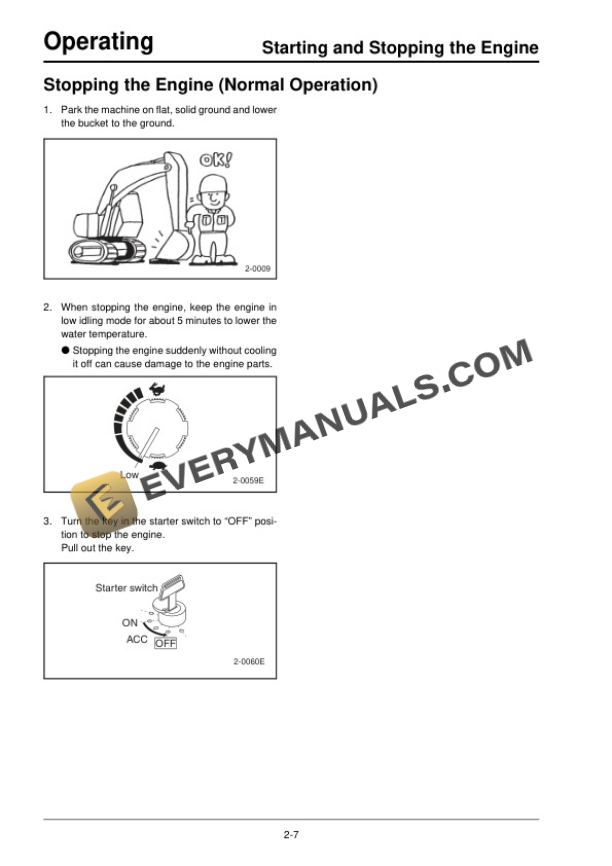
- 4.1.3.4. Stopping the Engine (Normal Operation)
- 4.1.4. Warmup Operation
- 4.1.4.1. Warmup Operation
- 4.1.5. Operations (Traveling)
- 4.1.5.1. Caution for use of rubber shoe
- 4.1.6. Operations (Swing)
- 4.1.6.1. Swing Operation
- 4.1.7. Operations (Attachment)
- 4.1.7.1. Operations (Attachment)
- 4.1.8. Operations
- 4.1.9. Operations
- 4.1.9.1. Blade Operation
- 4.1.9.2. Characteristics of Hydraulic Excavator
- 4.1.10. Operations
- 4.1.10.1. Cautions for operations
- 4.1.10.2. Cautions for Interference
- 4.1.11. Operating Instructions (Cautions)
- 4.1.12. Operating Instructions (Procedures)
- 4.1.13. Bucket Turning Over and Replacement
- 4.1.13.1. Bucket Turning Over and Replacement
- 4.1.14. On Completion of Daily Operations
- 4.1.14.1. On Completion of Daily Operations
- 4.1.15. Operating in Cold Climates
- 4.1.16. Operating under Extreme Conditions
- 4.1.17. Transportation
- 4.1.17.1. Loading and Unloading
- 4.1.17.2. Switch settings during loading and unloading
- 4.1.17.3. Transportation
- 4.1.18. Storing
- 5. CH03_01_J.pdf
- 5.1. Inspections and Maintenance
- 5.1.1. General Cautions
- 5.1.2. Periodic Maintenance Check List
- 5.1.2.1. Daily Inspections (Prior to Operation)
- 5.1.2.2. Periodic Maintenance Check List
- 5.1.2.3. Fuel / Lubricants for Different Ambient Temperature Settings
- 5.1.2.4. Genuine CASE Company LLC Parts and Elements
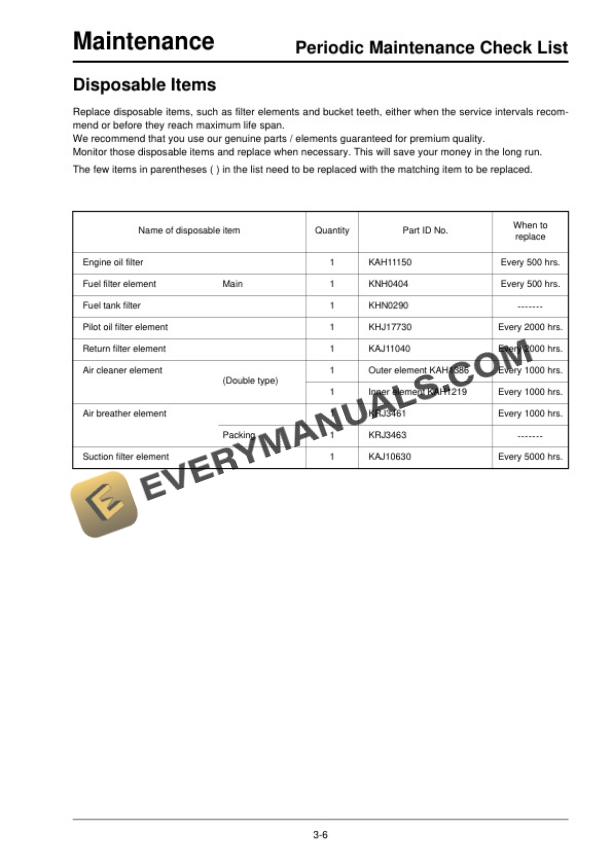
- 5.1.2.5. Disposable Items
- 5.1.3. Grease / Oil and Elements
- 5.1.4. Inspection Prior to Operation
- 5.1.4.1. Inspections Prior to Operation
- 5.1.5. Greasing Attachments
- 5.1.5.1. Greasing Front Attachment Pins
- 5.1.6. Fuel System
- 5.1.6.1. Fuel
- 5.1.6.2. Fuel Refilling and Fuel Level Checking
- 5.1.6.3. Drainage of Water and Sediments in the Fuel Tank
- 5.1.6.4. Draining Water from the Water Separator
- 5.1.6.5. . As Necessary
- 5.1.6.6. Fuel Filter (Main) Replacement
- 5.1.7. Engine
- 5.1.7.1. Engine Oil Replacement
- 5.1.7.2. Engine Oil Filter Replacement
- 5.1.7.3. Cooling System
- 5.1.7.4. Inspecting and Refilling Coolant
- 5.1.7.5. Replacing the Coolant
- 5.1.7.6. Cleaning and Inspecting the Radiator Net and Fin
- 5.1.7.7. Cleaning and Replacing the Air Cleaner (double elements)
- 5.1.7.8. Inspection and Adjustment of Fan Belt
- 5.1.8. Bolt Torque
- 5.1.8.1. Bolt and Nut Torque
- 5.1.9. Hydraulic Oil
- 5.1.9.1. Hydraulic Oil Level Inspection
- 5.1.9.2. Refilling Hydraulic Oil
- 5.1.9.3. Draining Water and Sediment from the Hydraulic Oil Tank
- 5.1.9.4. Hydraulic Oil Management
- 5.1.9.5. Hydraulic Oil Replacement
- 5.1.9.6. Bleeding Air from the Hydraulic Components
- 5.1.9.7. Air Bleeding Procedures
- 5.1.9.8. Air Bleeding from Hydraulic Pump
- 5.1.9.9. Air Bleeding from Cylinder
- 5.1.9.10. Air Bleeding from Swing Motor
- 5.1.9.11. Cleaning and Replacing Suction Filter
- 5.1.9.12. Replacing Return Filter
- 5.1.9.13. Replacing Air Breather Element
- 5.1.9.14. Replacing Pilot Oil Filter Element
- 5.1.9.15. Replacement Intervals for Hydraulic Oil and Filters when Using Breaker
- 5.1.9.16. Checking Hoses and Lines
- 5.1.10. Battery
- 5.1.10.1. Battery Inspection and Charge
- 5.1.11. Upper Frame
- 5.1.11.1. Turntable Bearing Greasing
- 5.1.11.2. Greasing Swing Ring Gear
- 5.1.12. Travel Unit
- 5.1.12.1. Travel Reduction Gear
- 5.1.12.2. Oil Level Inspection and Refilling of Travel Reduction Gear
- 5.1.12.3. Oil Replacement for Travel Reduction Gear
- 5.1.12.4. Inspecting Upper/Lower Takeup Roller (Idler Wheel)
- 5.1.12.5. Inspection and Tightening of Shoe Plate
- 5.1.12.6. Cleaning Crawler
- 5.1.12.7. Inspection and Adjustment of Track Shoe Tension
- 5.1.13. Bucket
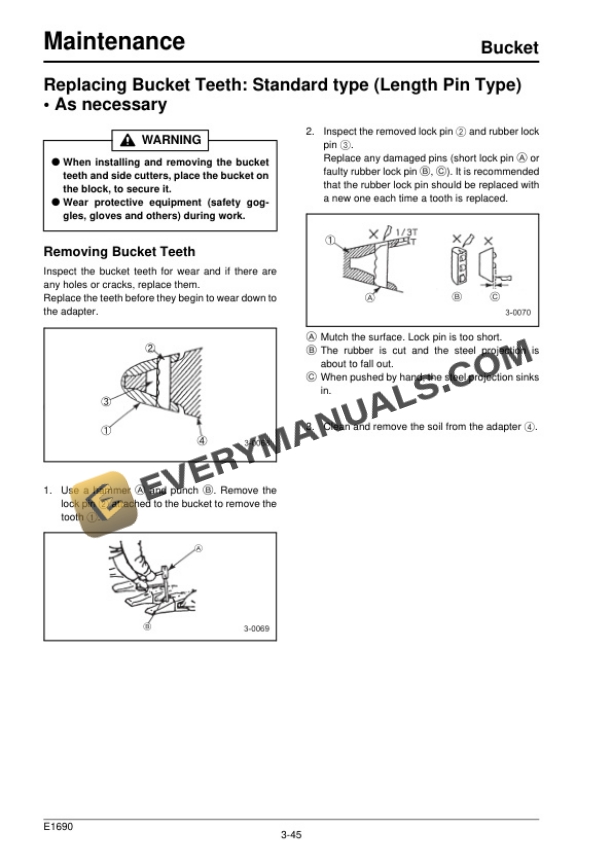
- 5.1.13.1. Replacing Bucket Teeth Standard type (Length Pin Type)
- 5.1.13.2. Adjustment of Bucket Backlash
- 5.1.14. Air Conditioner
- 5.1.14.1. Inspection and Care of Air Conditioner (If Equipped)
- 5.1.15. Routine Replacement Safety Parts
- 5.1.16. Troubleshooting
- 5.1.17. Contacting Us
- 6. CH04_01_J.pdf
- 6.1. Specifications
- 6.1.1. Conversion Factors
- 6.1.1.1. CONVERSION FACTORS
- 6.1.2. Specifications
- 7. CH05_01_J.pdf
- 7.1. Optional Components
- 7.1.1. Breakers
- 7.1.1.1. Handling the Breaker (Attachment)
- 7.1.1.2. When Using a Hydraulic Breaker
- 7.1.1.3. Operating the breaker
- 7.1.1.4. Importance of Hydraulic oil Control
- 7.1.2. Crusher
- 7.1.2.1. Using the Crusher (Attachment)
- 7.1.3. Load Lifting Operation
- 8. a_tp.pdf
- 8.1. Page 1
- 8.2. Page 2