
John Deere 2730 Combination Ripper Operator Manual OMKK60486
$30
- Type Of Manual: Operator Manual
- Manual ID: OMKK60486
- Format: PDF
- Size: 5.4MB
- Number of Pages: 128
Description
-
Model List:
- 2730 Combination Ripper
- 1. Introduction
- 1.1. Foreword
- 1.2. A Message to Our Customers
- 1.3. Recognize Safety Information
- 1.4. Understand Signal Words
- 1.5. Follow Safety Instructions
- 1.6. Spanish Safety Signs and Operators Manual
- 1.7. Prepare for Emergencies
- 1.8. Wear Protective Clothing
- 1.9. Protect Against Noise
- 1.10. Practice Safe Maintenance
- 1.11. Handle Electronic Components and Brackets Safely
- 1.12. Park Machine Safely
- 1.13. Support Raised Equipment
- 1.14. Remove Paint Before Welding or Heating
- 1.15. Avoid Heating Near Pressurized Fluid Lines
- 1.16. Avoid HighPressure Fluids
- 1.17. Inspect Lift Circuit Hoses
- 1.18. Store Attachments Safely
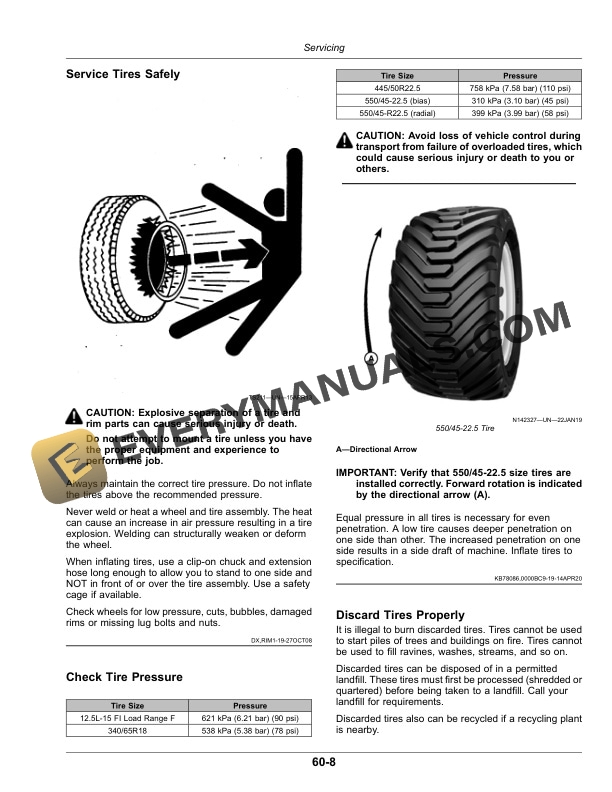
- 1.19. Service Tires Safely
- 1.20. Decommissioning Proper Recycling and Disposal of Fluids and Components
- 1.21. Handle Chemical Products Safely
- 1.22. Operate Safely
- 1.23. NonPermissible Use
- 1.24. Use Safety Lights and Devices
- 1.25. Keep Riders Off Machine
- 1.26. Observe Maximum Transport Speed
- 1.27. Use a Signal Person
- 1.28. Use a Safety Chain
- 1.29. Tow Loads Safely
- 1.30. Avoid Overhead Power Lines
- 1.31. Prepare for Transport
- 1.32. Transport Safely
- 1.33. Transport Implement Train
- 1.34. Transport LockUp Valve
- 1.35. Do Not Fold Wings Until Machine Is Fully Raised
- 1.36. Park Safely
- 2. Safety Signs
- 2.1. Replace Safety Signs
- 2.2. Main FrameFront
- 2.3. Main FrameSide
- 2.4. WingsFolding Machines
- 2.5. Informational Decals
- 3. Safety Features
- 3.1. Safety FeaturesMachines With SAE Connector
- 4. Preparing Tractor
- 4.1. Determine Tractor Requirements
- 4.2. Drawbar Requirements
- 4.3. Prepare Hydraulic SystemJohn Deere 8000/9000 and R/RT Series Tractors
- 4.4. Secure ThreePoint Hitch
- 4.5. Position Drawbar
- 5. Preparing Machine
- 5.1. Check and Lubricate Machine
- 5.2. Tighten Hardware
- 5.3. Machine Preparation Checklist
- 5.4. Adjust FronttoRear Leveling
- 5.5. Level Wing Frames to Main FrameFolding Machines
- 5.6. Adjust Scraper for SelfAdjusting Operation
- 5.7. Adjust Scraper for Rigid Operation
- 6. Attaching and Detaching
- 6.1. Use Your Tractor and Tillage Equipment Operators Manuals
- 6.2. Make Proper Hose Connections
- 6.3. Before Attaching Machine to Tractor
- 6.4. Attach Machine to Tractor
- 6.5. Attach Warning Light Plug
- 6.6. Use Warning Lights and SMV Emblem
- 6.7. Position Jack Stand for Transport
- 6.8. Attach Safety Chain to Tractor
- 6.9. Engage Transport LockUp Valve
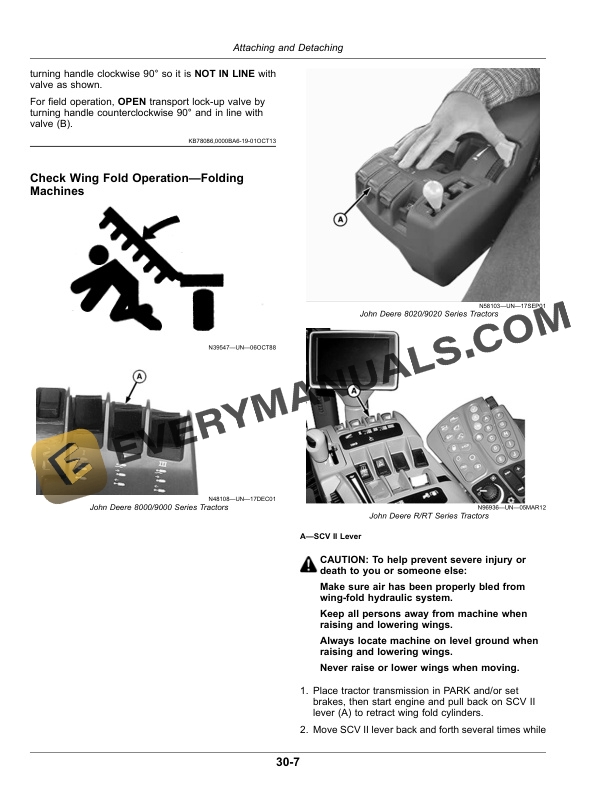
- 6.10. Check Wing Fold OperationFolding Machines
- 6.11. Check Depth Control Operation
- 6.12. Detach From Tractor
- 7. Transporting
- 7.1. Use Safety Lights and Devices
- 7.2. Observe Maximum Transport Speed
- 7.3. Use a Safety Chain
- 7.4. Attach Safety Chain to Tractor
- 7.5. Tow Loads Safely
- 7.6. Avoid Overhead Power Lines
- 7.7. Prepare for Transport
- 7.8. Close Transport LockUp Valve
- 7.9. Position Tractor Drawbar for Transport
- 7.10. Position Jack Stand for Transport
- 7.11. Check Leveling Adjustment
- 7.12. Transport Machine
- 7.13. Transport Implement Train
- 8. Operating Machine
- 8.1. General Guidelines for Use
- 8.2. Before Entering Field Guidelines
- 8.3. Field Operating Guidelines
- 8.4. Tighten Hardware
- 8.5. Use Operators Manual Holder
- 8.6. Operating Speed
- 8.7. Standards
- 8.8. Adjust CushionTrip Standard
- 8.9. Adjust FronttoRear Leveling
- 8.10. Proper Overlap
- 8.11. Adjust SinglePoint Depth Control
- 8.12. Field Depth Setting Procedure
- 8.13. Prepare to Operate in Field
- 8.14. Rephase Wing Depth CylindersFolding Machines
- 8.15. Level Wing Frames to Main FrameFolding Machines
- 8.16. Understand Active Hydraulic DownPressure Systems
- 8.17. Setting Rolling Baskets
- 8.18. Understand Active Hydraulic Rolling Basket DownPressure System
- 8.19. Adjust Rolling Basket DownPressureTractors With ElectroHydraulic Closed Center Systems
- 8.20. Adjust Rolling Basket DownPressureTractors With Mechanical SCV Controlled Closed Center Systems
- 8.21. Adjust Rolling Basket DownPressureTractors With Open Center Hydraulic Systems
- 8.22. Symptoms of Soil Compaction
- 8.23. Detect Compaction with John Deere Soil Probe
- 8.24. Soil Compaction Questions and Answers
- 9. Attachments
- 9.1. Adjustment Wrench
- 9.2. Disk Gang Tools
- 9.3. Closing Disk Spring Compression Tool
- 10. Lubricating
- 10.1. Lubricate and Maintain Machine Safely
- 10.2. Prevent Hydraulic System Contamination
- 10.3. Multipurpose Extreme Pressure (EP) Grease
- 10.4. Alternative and Synthetic Lubricants
- 10.5. Lubrication Symbols
- 10.6. Lubricant Storage
- 10.7. Perform Seasonal Lubrication
- 10.8. Lubricate Turnbuckle
- 10.9. Lubricate CushionTrip Standards
- 10.10. Lubricate Wheel Bearings
- 10.11. Lubricate Disk Gang Bearings
- 11. Troubleshooting
- 11.1. Verify Initial Settings
- 11.2. Machine Preparation Checklist
- 11.3. Troubleshooting Chart
- 11.4. Disk Blade and/or Disk Component Failure
- 11.5. Maximize Disk Gang Penetration
- 12. Servicing
- 12.1. Practice Safe Maintenance
- 12.2. Use Safe Service Procedures
- 12.3. Work in Clean Area
- 12.4. Service Machines Safely
- 12.5. Support Machine Properly
- 12.6. Avoid HighPressure Fluids
- 12.7. Replace Hydraulic Hoses
- 12.8. Sharpen Sweeps and Disks
- 12.9. Tighten Hardware
- 12.10. Metric Bolt and Screw Torque Values
- 12.11. Unified Inch Bolt and Screw Torque Values
- 12.12. Face Seal Fittings Assembly and InstallationAll Pressure Applications
- 12.13. Metric Face Seal and ORing Stud End Fitting Torque ChartStandard Pressures
- 12.14. SAE Face Seal and ORing Stud End Fitting Torque ChartStandard Pressures
- 12.15. Service Tires Safely
- 12.16. Check Tire Pressure
- 12.17. Discard Tires Properly
- 12.18. Repair Tire
- 12.19. Check Wheel HardwareAll Tillage Machines
- 12.20. Inspect Main Frame Wheel Module Bearings
- 12.21. Replace Main Frame Wheel Module Bearings
- 12.22. Inspect Wing Frame Wheel Module Bearings
- 12.23. Replace Wing Frame Wheel Module Bearings
- 12.24. Discard Waste Oil Properly
- 12.25. Prevent Hydraulic System Contamination
- 12.26. Check Depth Control Cylinders for Internal LeakageRigid Machines
- 12.27. Check Depth Control Cylinders for Internal LeakageFolding Machines
- 12.28. Analyze Test Results
- 12.29. Remove Hydraulic Cylinders
- 12.30. Bleed Hydraulic Cylinders
- 12.31. Replace Ripper Point
- 12.32. Replace Shank Wear Shin (If Equipped)
- 12.33. Replace ShankCushionTrip Standard
- 12.34. Tighten CushionTrip Standard UBolts
- 12.35. Tighten CSpring Standards
- 12.36. Replace Rolling Basket Split Tension Bushings
- 12.37. Tighten Rolling Basket Cap Screws
- 12.38. Service Single Disks
- 12.39. Verify Torque Specifications
- 12.40. Service Gangs
- 12.41. Gang Component Diagram
- 12.42. Assemble Gang Bolt Tensioner
- 12.43. Disassemble Gangs
- 12.44. Assemble Gangs
- 12.45. Identify Disk Blades Eligible for Warranty
- 12.46. Identify Disk Blades Not Eligible for Warranty
- 13. Storing
- 13.1. Remove Machine from Storage
- 13.2. Place Machine In Storage
- 14. Specifications
- 14.1. Tractor Power Recommendations
- 14.2. Hydraulic Requirements
- 14.3. Download Force on Tractor Drawbar
- 14.4. Hitch Specifications
- 14.5. Rigid Machine Specifications
- 14.6. Folding Machine Specifications
- 14.7. Record Product Identification Number (P.I.N.)
- 14.8. Keep Proof of Ownership
- 14.9. Keep Machines Secure
- 15. John Deere Service Literature Available
- 15.1. Technical Information
- 16. John Deere Service Keeps You On The Job
- 16.1. John Deere Is At Your Service
Related products

-50%

Original price was: $20.$10Current price is: $10.
-50%

Original price was: $20.$10Current price is: $10.
-50%

Original price was: $20.$10Current price is: $10.
-50%

Original price was: $20.$10Current price is: $10.


-50%

Original price was: $20.$10Current price is: $10.