
John Deere PH1101T and PH1101B Pull Type Harvesters Operator Manual 5JM8960045
$30
- Type Of Manual: Operator Manual
- Manual ID: 5JM8960045
- Format: PDF
- Size: 4.0MB
- Number of Pages: 86
Description
-
Model List:
- PH1101T Pull Type Harvester
- PH1101B Pull Type Harvester
- 1. Contents
- 1.0.1. Recognize Safety Information
- 1.0.2. Understand Signal Words
- 1.0.3. Follow Safety Instructions
- 1.0.4. Prevent Machine Runaway
- 1.0.5. In Case of Fire
- 1.0.6. Operate Machine Safely
- 1.0.7. Keep Riders Off Machine
- 1.0.8. Avoid Rollover Accidents
- 1.0.9. Prepare for Emergencies
- 1.0.10. Wear Protective Clothing
- 1.0.11. Protect Against Noise
- 1.0.12. Insecticide and/or Herbicide Hoppers Lid Fill Closed Handling System
- 1.0.13. Use Safety Lights and Devices
- 1.0.14. Avoid HighPressure Fluids
- 1.0.15. Transport Safely
- 1.0.16. Comply with the Transport Speed Limit
- 1.0.17. Service Machine Safely
- 1.0.18. Practice Safe Maintenance
- 1.0.19. Remove Paint Before Welding or Heating
- 1.0.20. Store Attachments Safely
- 1.0.21. Decommissioning Proper Recycling and Disposal of Fluids and Components
- 1.0.22. Observe Environmental Protection Regulations
- 1.0.23. Store Harvester Safely
- 1.0.24. Use Service Stops
- 1.1. Safety Signs
- 1.1.1. Safety Sign Locations
- 1.1.2. Warning Decal Slow Moving Vehicle
- 1.1.3. Safety Sign Locations on Exhaust Pipe
- 1.1.4. Safety Sign Locations on Bulk Unit Tank
- 1.1.5. Safety Signs Locations on Corn Platform
- 1.2. Preparing the Tractor
- 1.2.1. Use Your Tractor Operators Manual
- 1.2.2. PushPull Level Mounting on the Tractor (If Equipped)
- 1.3. Preparing The Machine
- 1.3.1. Preoperational / Preseason Service
- 1.3.2. Front Counterweight
- 1.3.3. Install Residue Disposal Pan
- 1.3.4. Install Sight Glass
- 1.3.5. Height Adjustment
- 1.4. Attaching and Detaching
- 1.4.1. Tractor Requirements
- 1.4.2. Attaching the Machine to Tractor
- 1.4.3. Detaching the Machine From Tractor
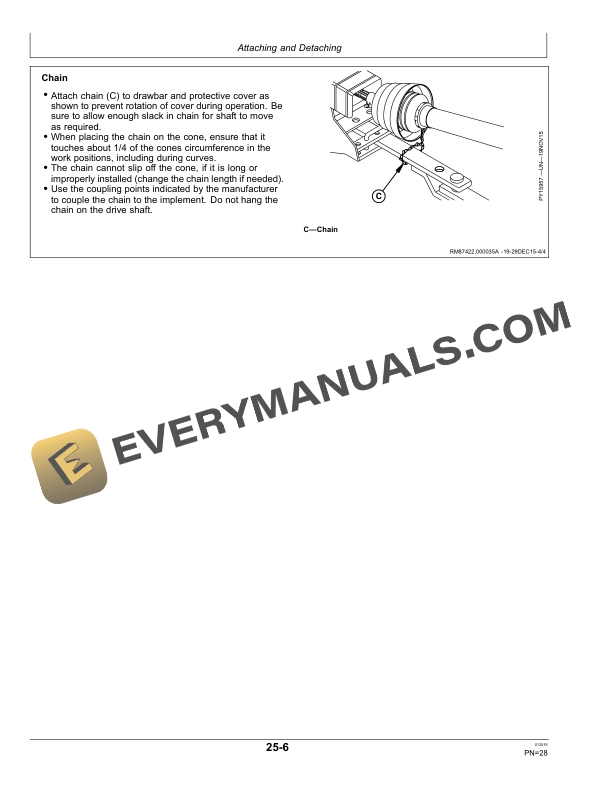
- 1.4.4. Universal Drive Shaft
- 1.5. Preparing Harvester For Use
- 1.5.1. Support Rollers
- 1.5.2. Rotation of Tractor PTO
- 1.5.3. Hydraulic Cylinders
- 1.5.4. Leveling the Harvester
- 1.5.5. Beginning Operation and Ground Speed
- 1.5.6. Preventive Test
- 1.5.7. Harvester Conditions
- 1.5.8. Humidity Conditions
- 1.5.9. Harvester Ground Speed
- 1.5.10. Adjustments of Drive System Belts
- 1.5.11. Checking Belt Tension
- 1.6. Threshing Unit
- 1.6.1. Rotary Type Threshing System
- 1.6.2. Rotary Cylinder Tines Adjustment
- 1.6.3. Adjust Rotor Speed
- 1.7. Separator and Cleaning Unit
- 1.7.1. Vibratory sieve
- 1.7.2. Replace Sieve
- 1.7.3. Adjust Sieve Angle
- 1.7.4. Adjust Grain Deflector Plate
- 1.7.5. Cover Plate and Sieve for Conveyor Grain Auger
- 1.7.6. Grain Tank Unloading Auger Cover Plate
- 1.7.7. Cleaning Fan and Ventilation System
- 1.8. Elevators, Grain Tank and Unloading System
- 1.8.1. Grain Elevator
- 1.8.2. Grain Tank
- 1.8.3. Unloading Auger
- 1.8.4. Engage and Disengage Grain Tank Unloading Auger
- 1.8.5. Grain Tank Auger Cover Kit (Optional)
- 1.9. Corn Header Platform and Adjustments
- 1.9.1. Corn Platform
- 1.9.2. Adjust Platform Height
- 1.9.3. Attach Corn Header Platform
- 1.9.4. Platform Auger Drive
- 1.9.5. Check Row Unit Transmission Oil Level
- 1.9.6. Auger Drive Alignment and Chain Tension
- 1.9.7. Adjust Deck Plate
- 1.9.8. Adjust Trash Knives
- 1.9.9. Adjusting Gatherer Chain Tension
- 1.9.10. Adjust Gathering Chain Flight
- 1.9.11. Chain Guide Pickers Adjustment
- 1.9.12. Adjusting Auger
- 1.9.13. Adjust Platform Position
- 1.10. Wheels and Tires
- 1.10.1. Service Tires Safely
- 1.10.2. Tire Inflation Pressure Chart
- 1.11. Lubricants
- 1.11.1. Use Correct Lubricant
- 1.11.2. Mixing of Lubricants
- 1.11.3. Alternative and Synthetic Lubricants
- 1.12. Lubrication and Maintenance
- 1.12.1. Lubricant Storage
- 1.12.2. Lubrication Symbols
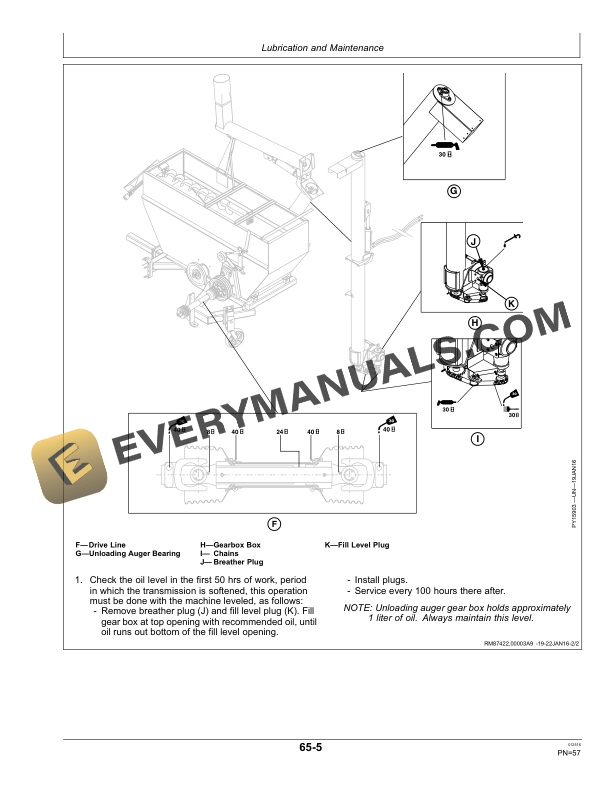
- 1.12.3. Corn Platform Lubrication (If Equipped)
- 1.12.4. Frame and Grain Tank Assembly Lubrication
- 1.12.5. Structure Assembly Lubrication
- 1.12.6. Corrective Maintenance
- 1.12.7. Predictive Maintenance
- 1.12.8. Sieve Inspection Panel
- 1.12.9. Header Inspection Cover
- 1.12.10. Grain Elevator Auger Inspection Cover
- 1.12.11. Grain Tank Clean Out Cover
- 1.12.12. Maintenance of Hydraulic Cylinders
- 1.12.13. General Chain Maintenance
- 1.12.14. Maintenance of Chain
- 1.12.15. Storing Belts
- 1.12.16. Inspect Belts
- 1.12.17. Remove and Install Belts
- 1.12.18. Cleaning the Machine After harvest
- 1.13. Troubleshooting
- 1.13.1. Implement Troubleshooting
- 1.13.2. Corn Platform Troubleshooting
- 1.13.3. Belt Troubleshooting
- 1.13.4. Chains Troubleshooting
- 1.13.5. Hydraulics Troubleshooting
- 1.13.6. Bearings Troubleshooting
- 1.14. Storage
- 1.14.1. Preparing Machine for Storage
- 1.14.2. Removing Machine from Storage
- 1.15. Torque Charts
- 1.15.1. Metric Bolt and Screw Torque Values
- 1.15.2. Unified Inch Bolt and Screw Torque Values
- 1.15.3. Face Seal Fittings Assembly and InstallationAll Pressure Applications
- 1.15.4. Metric Face Seal and ORing Stud End Fitting Torque ChartStandard Pressures
- 1.15.5. Metric Face Seal and ORing Stud End Fitting Torque ChartHigh Pressure Applications
- 1.16. Specifications
- 1.16.1. Specification and Application Rates
- 1.16.2. Keep Machines Secure
- 1.16.3. Keep Proof of Ownership
- 1.17. Machine Identification Numbers
- 1.17.1. Identification Number
- 1.17.2. Machine Identification Plate
- 1.18. John Deere Service Keeps You on the Job
- 1.18.1. John Deere Parts
- 1.18.2. The Right Tools
- 1.18.3. WellTrained Technicians
- 1.18.4. Prompt Service
- 2. Page Number
- 2.1. Section 5
- 2.2. Section 10
- 2.3. Section 15
- 2.4. Section 20
- 2.5. Section 25
- 2.6. Section 30
- 2.7. Section 35
- 2.8. Section 40
- 2.9. Section 45
- 2.10. Section 50
- 2.11. Section 55
- 2.12. Section 60
- 2.13. Section 65
- 2.14. Section 70
- 2.15. Section 75
- 2.16. Section 80
- 2.17. Section 85
- 2.18. Section 90
- 2.19. Section IBC
Related products
-50%

Original price was: $20.$10Current price is: $10.

-50%

Original price was: $20.$10Current price is: $10.


-50%

Original price was: $20.$10Current price is: $10.

-50%

Original price was: $20.$10Current price is: $10.